

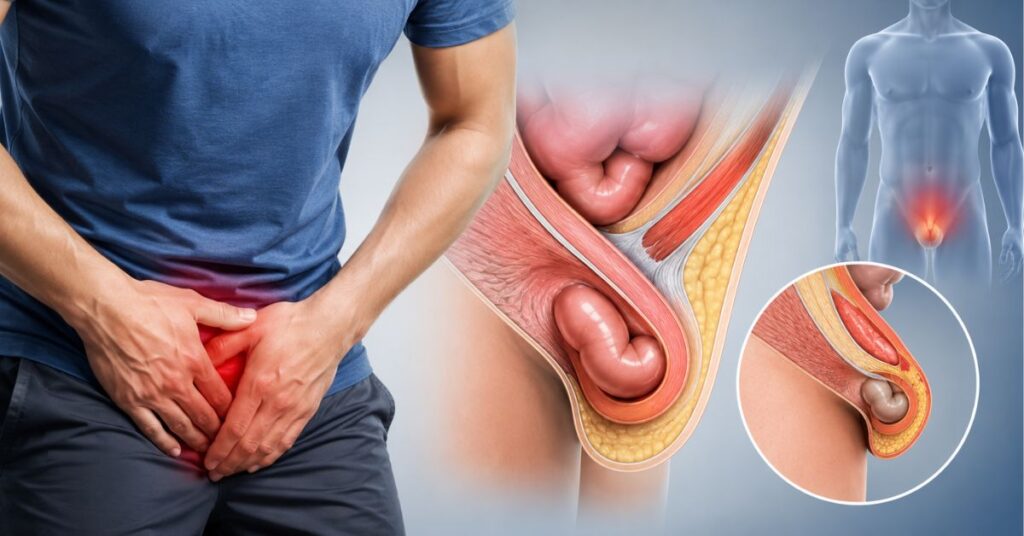
Inguinal hernias are the most common type of hernia, making up roughly 70% of all abdominal hernias. This type of hernia happens when tissue pushes through a hole in the groin muscles. It can create a noticeable bulge that may hurt when you move around.
Anatomy of Inguinal Canal
The inguinal canal is a passage through the groin, through which in males runs the spermatic cord and in females the round ligament. The anatomical path creates a weak spot in the abdominal wall. The canal structures are different in men and women (narrower and more defined in women) but inguinal hernias still occur in about 3-5% of the female population versus 27% of men.
Gender Differences
Men get inguinal hernias nearly nine times more than women. The reason for this dramatic difference is because of the spermatic cord passing through the inguinal canal in male development. The cord produces a permanent anatomical weak point which women do not have.
Contributing Factors
An inguinal hernia results from increased abdominal pressure against a weakened spot. Common causes are chronic cough, heavy lifting, straining during a bowel movement and prolonged standing. Inguinal hernias are rare before age 40 but rise sharply after age 55.
Symptom Presentation
The classic symptoms are a visible bulge in the groin, pain that worsens with activity or standing, and a burning or aching sensation and pressure in the groin. When a person is lying down, gravity helps tissue return to its proper place, and the bulge disappears.
Anatomical Distinctions
A direct inguinal hernia occurs when there is a weakness in the floor of the inguinal canal. They are common in older men. Indirect inguinal hernias take the course of the spermatic cord and make up about 60 per cent of all inguinal hernias. These can be present at birth but may not become symptomatic until later in life.
Complication Recognition
Incarceration is when the herniated tissue becomes trapped and cannot go back into the abdominal cavity. Strangulation is a surgical emergency involving cut off of blood supply. This risk of strangulation is cited in the surgical literature to be about 2 to 10%.
When to Seek Care
Call emergency services immediately if you have sudden, severe pain in the groin, cannot push the hernia back into your abdomen, have ongoing nausea or vomiting, or see redness or warmth over the hernia.
Physical Exam
Physicians examine the groin in the standing position, and occasionally have the patient cough or strain to make the bulge more visible. The examiner notes the size, location and tenderness of the hernia.
Imaging & Diagnostics
Most inguinal hernias are diagnosed by clinical examination. However, if physical examination remains inconclusive, ultrasound or CT imaging is helpful, especially in obese patients.
Non-Operative Management
Watchful waiting means observation without immediate surgery, plus changes to lifestyle. Treatment to control symptoms includes avoiding heavy lifting, maintaining a normal weight, treating chronic cough and preventing constipation.
When surgery is required
Estimates that nearly 80 per cent of patients who have a symptomatic inguinal hernia will eventually have surgery to repair it.
Recovery Schedule
Recovery from open surgery is usually 2 to 3 weeks before resumption of light activities, and 4 to 6 weeks before resumption of full activity. Laparoscopic repair offers quicker recovery, 1-2 weeks with light activities.