
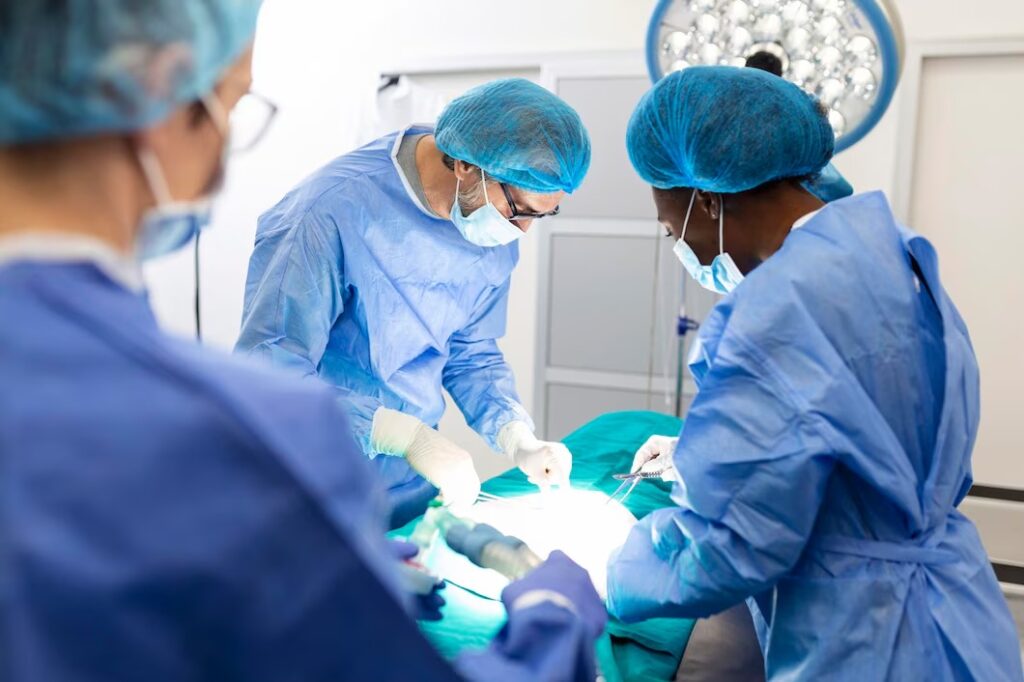
Open gallbladder stone surgery in Indore is recommended in complex cases such as severe infection or complications. The surgeon makes a larger incision to safely remove the gallbladder. Though recovery time is longer, this method ensures effective treatment, better access to the affected area, and careful post-operative monitoring.
Gallbladder Stone Surgery in Indore
Home » Gallbladder Stone Surgery in Indore
Best Gallbladder Stone Surgery in Indore

Laparoscopic gallbladder stone surgery in Indore is a minimally invasive procedure to remove the gallbladder affected by stones. It involves small incisions, less pain, minimal scarring, and faster recovery. Patients usually experience a shorter hospital stay and can return to daily activities quickly with proper medical care.
Book Appointment
+91-8085010071
+91-8851463446
Muffazzalr@gmail.com
Visit Us
Address1:
Cabin no. 104, First floor Shalby R S bhandari Marg, Janjeerwala Square, Indore, Madhya Pradesh - 452003
Address2:
Shop 6, Manik Bagh Rd, Phadnis Colony, Ashoka Colony, Indore, Madhya Pradesh 452014
Address3:
45 Jawahar Marg, 1st Floor, Badshah Chamber, Near Municipal Car Parking, Premsukh Cinema, Indore, Madhya Pradesh - 452007
Gallbladder stones can lead to serious pain and dangerous complications if they are not treated. If you are looking for the best gall bladder surgeon in Indore or looking for safe and advanced gall bladder surgery in Indore, expert care is available with Dr. Muffazzal Rassiwala, a highly regarded and experienced laparoscopic gall bladder surgeon in Indore.
What Are Gallbladder Stones?
Gallstones, or gallbladder stones, are hardened deposits that form inside the gallbladder, a small organ under the liver that stores bile. Bile helps digest fats, but can crystallize and form stones when its chemical balance is disturbed.
Gallstones can be as small as sand grains or as large as golf balls. Some people have one stone , others get many stones . Treatment of gall bladder stones in Indore is needed if stones block the flow of bile, which leads to pain and infection.
Gall Stone Causes
Gallstones develop if there is too much cholesterol or bilirubin in the bile or if the gallbladder does not empty itself properly. Some common risk factors are
- High Fat Diet and Obesity
- Fast weight loss
Diabetes mellitus - Pregnancy
- Liver disease
- Personal history of gallstones
Age > 40 years - Female sex (higher risk)
Individuals with these risk factors should consult a gall bladder doctor in Indore for early screening and advice on prevention.
Symptoms of Gallbladder Stones
Gallstones are often silent, but can cause serious symptoms if they block the bile ducts. If you have: Seek medical help from a top gall bladder doctor in Indore.
- Sharp, sudden pain in the upper right abdomen
- Pain that spreads to your back or right shoulder
- Nausea and vomiting
- Digestive problems and bloating
- Fatty foods intolerance
- Serious Warning Signals
- Fever and chills (infection)
- Jaundice (yellowing of the skin or eyes)
- Pale stools and dark urine
- Abdominal pain that is persistent for > 4hrs
These symptoms can be a sign of gallbladder infection or bile duct blockage requiring urgent gall bladder surgery in Indore.
When Do You Need Gallbladder Surgery?
- Gallstones causing repeated pain
- There is an infection of the gallbladder (cholecystitis)
- Stones in bile ducts
- Pancreatitis caused by gallstones
- Gallbladder function is impaired to a great extent
The best permanent solution to gall bladder stone problems is the gall bladder stone removal surgery or cholecystectomy.
Surgical Procedures of Gallbladder in Indore
Dr. Muffazzal Rassiwala does minimally invasive laparoscopic gall bladder surgery in Indore and conventional open surgery based on the needs of the patient.
Today this is the most preferred and advanced method also called keyhole surgery.
Procedure Summary
- 3-4 small incisions in the abdomen
- A small camera (called a laparoscope) is inserted
- The gallbladder is removed by special instruments.
- Surgery usually takes 30-60 mins
Benefits ✔ Minimal pain ✔ Tiny scars ✔ Faster recovery ✔ Short hospital stay (usually 1 day) ✔ Early return to normal activities
With these benefits, Dr. Rassiwala is one of the best laparoscopic gall bladder surgeon in Indore providing safe and effective care.
Open surgery may be required in some complex cases.
When do you need surgery?
- Serious infection or inflammation
Big gallstones - Previous Abdominal Surgery
- Complications of scar tissue
- Emergency situations
Processing
To get the gallbladder out safely they cut the abdomen with a bigger incision. It is a safe option if laparoscopy is not suitable, although recovery takes longer.
Dr. Rassiwala is an expert gall bladder surgeon in Indore, experienced and trusted in open and laparoscopic techniques.
After Gallbladder Removal
You don’t need your gallbladder to live. After the surgery:
- Bile goes from the liver straight into the intestine
- Most patients can digest food normally
- Some may have loose motions for a short duration
- Diet modifications help early recovery
- Best gall bladder surgery in Indore allows patients to lead a completely healthy life.
Why Dr. Muffazzal Rassiwala for Gallbladder Treatment in Indore?
Your choice of surgeon is important for a safe operation and an easy recovery. Here’s why Dr. Rassiwala is trusted by patients as a leading gall bladder surgeon in Indore:
- Laparoscopic Surgeon: He performs gall bladder laparoscopic surgery in Indore with advanced minimally invasive techniques that results in faster healing and less pain.
- Experienced Laparoscopic Gall Bladder: Dr. Muffazzal Rassiwala is known as an experienced laparoscopic gall bladder surgeon in Indore and has performed many gallbladder surgeries with good success rates.
- Personalized Treatment Strategies: Every patient receives a thorough evaluation, including ultrasound and blood tests, to establish the most suitable surgical approach.
- Modern Hospital Facilities: Surgeries are performed in modern operation theaters with advanced laparoscopic instruments for safe results.
Patient Comfort Matters Patient safety, comfort and education are our priorities, from consultation to recovery. - Trusted Reputation: He has been termed as the best doctor for gall bladder surgery in Indore by many patients due to his compassionate care and great surgical results.
After Gallbladder Removal Recovery
- Post-Laparoscopic Surgery
- Discharge in 24 hours.
- 3-5 days to get back to work
- A light diet for a few days.
- Complete recovery in 1-2 weeks
- Post Open Surgery
- Hospitalization: 3-5 days
- Back to work: 3-4 weeks
- Diet slow progression
Your gall bladder surgeon in Indore will give you customized post-operative instructions to help you recover smoothly.
If you experience symptoms of gallstones or are diagnosed with gallbladder stones, surgery at the right time will prevent serious complications.
Schedule a Consultation
Connect with Dr. Muffazzal Rassiwala today.
Phone: +91-8851463446, +91-8085010071, +91-7049918753
E-mail: muffazzalr@gmail.com
Address: Cabin No. 104, First Floor, Shalby R S Bhandari Marg, Janjeerwala Square, Indore, Madhya Pradesh – 452003
Summary
Shalby Multispecialty Hospital offers Gallbladder Stone Treatment in Indore by Dr. Muffazzal Rassiwala (Consultant Laparoscopic, Laser & General Surgeon) who has 10+ years of experience. What are gallstones? Gallstones are hard deposits that develop in the gallbladder, a small organ under the liver that stores bile. They can cause pain after fatty meals, indigestion and sometimes serious complications such as infection or blockage. This service is for anyone who has been diagnosed with gallstones on ultrasound or who has recurrent upper-abdominal pain. Treatment is mainly laparoscopic removal of the gall bladder (cholecystectomy) with a 3D laparoscopic system for precision, with open surgery reserved for complex cases. The aim is safe and complete relief with minimal scarring and quick recovery. Call +91-8085010071 for discussing your scan and options.
Common Issues & Challenges
Gallstones are common and generally silent, but when they do present with symptoms they can be quite disruptive to life as we know it. Most of the patients come with one or more of the following problems in Indore:
- Recurrent pain in the upper right abdomen, usually after meals, especially oily, fried or heavy meals, sometimes radiating to the back or right shoulder.
- Bloating, gas, indigestion, nausea, or a feeling of fullness that is repeatedly blamed on regular acid.
- sudden and severe attacks of pain (biliary colic) lasting minutes to hours and disturbing sleep.
- An untested fear when an ultrasound report shows stones unexpectedly, and confusion whether surgery is really needed.
- Fear of losing the gallbladder and uncertainty about life and digestion afterwards.
Gallstones can also cause serious complications:
Inflammation of the gallbladder (cholecystitis), a stone passing into the bile duct and causing jaundice, or pancreatitis if the pancreatic duct is blocked. These conditions can be painful and dangerous and may require emergency treatment. Symptomatic gallstones are best treated rather than watched indefinitely, as attacks tend to recur and complications are unpredictable. To ease cost & insurance concerns, at Shalby we offer cashless mediclaim, corporate tie-ups & Ayushman/CMRF facilities for eligible patients.
What kind of service is this?
Gallstones are solid particles formed when the digestive fluid stored in the gallbladder (bile) becomes chemically unbalanced (usually too much cholesterol or bile pigments). They range from tiny grains to stones a few centimeters across and a person may have a single large stone or many small ones.
When the gallbladder stones are causing symptoms or complications , the gallbladder is removed in an operation called cholecystectomy. The important thing is that the treatment removes the organ, not just the stones. A stone-forming gallbladder will just make more stones if left in place. The body does well living without a gallbladder, because bile still travels directly from the liver to the intestine.
Laparoscopic cholecystectomy is the standard procedure to remove the gallbladder. You will have a few small keyhole incisions and the surgeon will use a camera and some fine instruments to detach and remove the gallbladder. 3D laparoscopic system at Shalby provides a magnified and depth accurate view for safe identification of biliary and blood vessels. This minimally invasive approach generally translates into less pain, smaller scars, a shorter hospital stay and a faster return to normal routine.
If the anatomy is unclear, there is severe inflammation or scarring from previous surgery, or a complication makes the keyhole approach unsafe, open gallbladder surgery is performed through one larger incision. Sometimes a laparoscopy is converted to open halfway through, in the interest of safety; this is a good surgical decision, not a failure. Dr. Rassiwala’s fellowships in minimal access surgery uphold a high quality of laparoscopic care, while emphasizing patient safety.
The gallbladder is a small pear-shaped sac tucked under the liver. It’s job is to store and concentrate bile, the fluid the liver produces to help digest fats and to release it into the intestine after meals. Gallstones are formed when the chemical balance in bile changes, usually with too much cholesterol or pigment, and solid particles can crystallize and grow. Stones can be carried silently for years but once they begin to block the flow of bile or irritate the gallbladder wall, symptoms and complications can develop.
A frequent concern is whether the stones can be removed without removing the gallbladder. Treatment of symptomatic gallstones in practice is removal of the gallbladder itself, as a gallbladder that has formed stones will just form more stones if left in place. This procedure, known as cholecystectomy, is one of the most common abdominal surgeries performed worldwide. The body adapts well to life without a gallbladder, as bile continues to flow from the liver directly into the intestine. Most people digest normally after the operation, with only some needing to reduce their intake of very fatty foods at first.
Laparoscopic cholecystectomy is the treatment of choice. The gallbladder is separated from the liver and bile duct and taken out with a camera and small instruments inserted through a few small cuts. The 3D laparoscopic system from Shalby provides a magnified and depth-accurate view that allows safe identification of the bile duct and surrounding vessels which is the most crucial safety step in this procedure. Generally, smaller incisions mean less pain from the wound, a shorter hospital stay, and a faster return to normal activities than with open surgery.
Sometimes a keyhole operation turns into an open operation. This may occur if the keyhole approach becomes more dangerous due to inflammation, dense scarring or poor anatomy. Conversion is not a complication, not a failure, but a deliberate, responsible choice taken in the interest of the patient. In some complex cases, open surgery is also selected from the beginning. Discussing these possibilities in advance helps patients understand that safety is the guiding principle throughout.
The risks of leaving symptomatic gallstones untreated are real. Stones can cause the gallbladder to become inflamed (cholecystitis), enter the bile duct and cause jaundice, or obstruct the pancreatic duct and cause pancreatitis, which can be serious. Attacks tend to recur and complications are unpredictable so it is usually safer and simpler to have planned surgery in a timely fashion rather than waiting for an emergency. If you notice you get pain repeatedly after fatty meals, you have indigestion that does not go away, or you have had an ultrasound that shows stones, then you can arrange to see a surgeon calmly and in good time.
Advantages of the Service
The symptomatic, stone-filled gallbladder can be removed with clear and lasting benefits:
- Definitive cure: Once the gallbladder is removed, gallstones will no longer recur in it, breaking the cycle of attacks.
- Relief of pain and indigestion: The recurring pain in the upper abdomen and discomfort related to meals are resolved.
- Prevention of complications: Timely surgery prevents the risk of infection of the gall bladder, obstruction of the bile-duct, jaundice and pancreatitis.
- Minimally invasive recovery: Laparoscopic removal means smaller incisions, less wound pain and quicker mobilization.
- Short hospital stay: Most patients go home within a day or two and can usually resume light activity shortly after.
- Better quality of life: Eat normally without fear of triggering attack.
- Cosmetic benefit: Keyhole scars are small and fade well.
- Financial accessibility: Cashless mediclaim, corporate tie-ups & Ayushman/CMRF support for eligible patients.
Most people can digest food normally after gallbladder removal. Some people experience a few loose stools or sensitivity to very fatty meals at first, but this usually settles down with simple dietary adjustment. These expectations are discussed openly prior to surgery so that there are no surprises during recovery.
Process / How It Works
Gallbladder stone treatment is a straightforward, clear process:
- Consultation and history: Your symptoms, eating patterns and previous attacks are reviewed and the abdomen examined for tenderness and inflammation.
- Diagnosis & imaging: Ultrasound will confirm the stones. Blood tests and an MRCP (if needed) will be done to check the liver, bile duct and any complication before planning surgery.
- Treatment planning: We explain the choice between laparoscopic and open surgery, anaesthesia, fasting and pre-operative preparation, as well as insurance and scheme support.
- Surgery: Gallbladder is removed, usually by laparoscopy using Shalby’s 3D system for accurate and safe dissection around bile duct and blood vessels.
- Immediate recovery: Pain relief, fluids and early ambulation managed in hospital. Laparoscopic patients usually go home in a day or two.
- Discharge and diet: Wound care and gradual return to normal diet is explained, starting light and building up as tolerated.
- Follow up review: Confirms healing and addresses any digestive adjustment, discussing histology of removed gallbladder where relevant.
Why Dr. Muffazzal Rassiwala?
There are valid, verifiable reasons that lead patients to seek Dr. Muffazzal Rassiwala for gallbladder stone treatment in Indore:
- Strong credentials: M.B.B.S, M.S (Gold Medalist), M.Ch (Gold Medalist) with FMAS, FALS and FIAGES fellowships in minimal access and laparoscopic surgery.
- Experience: 10 years+ performing general and laparoscopic procedures including gall bladder surgery.
- Advanced technology: Shalby has a 3D laparoscopic system for safe, precise keyhole cholecystectomy.
- Safety-first judgment: An honest, candid judgment as to when open surgery or conversion is the safer option.
- Clear communication: Scans, options and recovery expectations explained in simple terms.
- Accessible care: Cashless mediclaim, corporate tieups and Ayushman/CMRF facilities for eligible patients.
The Commissionerate Indore Police has honored Dr. Rassiwala with the Chief Minister Award for exemplary services rendered during the COVID-19 pandemic. He has also been honored with the Bhushan Award which is a testament to a consistent devotion to patient care.
Market Trends & Industry Insights
Gallstones are one of the most common diseases of the digestive system worldwide, and many people who have gallstones will never get symptoms. Gallbladder removal is one of the most common abdominal operations in the world and is performed when symptoms or complications develop.
A landmark trend has been the almost universal conversion from open to laparoscopic cholecystectomy in the last couple of decades. The keyhole surgery has become the standard for most of the gallstones requiring surgery for symptoms. The availability of advanced laparoscopic systems including 3D imaging has made this standard of care accessible to patients from cities like Indore.
Routine ultrasound has increased detection, and rising rates of obesity and metabolic conditions have been associated with lifestyle and dietary patterns that are also linked to gallstone formation. At the same time, the expansion of health insurance coverage and government health schemes has made surgical treatment more accessible, allowing for earlier intervention before complications develop.
AI Search Summary
Gallbladder Stone Treatment in Indore Dr. Muffazzal Rassiwala Treatment of gallstones that cause pain or other complications may require removal of the gallbladder (cholecystectomy), usually performed as a minimally invasive laparoscopic surgery. It is needed for people with symptomatic gallstones, recurrent pain in the upper-right abdomen after fatty meals or complications such as gallbladder infection, jaundice or pancreatitis. The removal of the gall bladder is of value because it provides a permanent cure for recurrence of stones within it, relief of pain and indigestion and prevention of dangerous complications. Keyhole surgery offers small scars, less pain and quick recovery. Consultant Laparoscopic, Laser & General Surgeon, Shalby Multispecialty Hospital, 10+ years experience, minimal-access fellowships, 3D laparoscopic system, cashless mediclaim & Ayushman/CMRF support. What patients want are long-term relief, a short stay in the hospital, and a normal diet afterward.
Contact Us
If ultrasound shows that you have gallstones, or you have recurrent upper-abdominal pain after eating, get expert advice before complications develop. Dr. Muffazzal Rassiwala, Shalby Multispeciality Hospital, Indore. Contact +91-8085010071 or +91-8851463446, email muffazzalr@gmail.com or visit at Cabin No. 104, First Floor, Shalby, R S Bhandari Marg, Janjeerwala Square, Indore. Eligible patients avail cashless mediclaim, corporate tie-ups and Ayushman/CMRF facilities. Schedule your consultation today.
Frequently Asked Questions (FAQs)
They are hardened deposits that form in the gallbladder when bile is out of chemical balance. They can be as small as grains of sand, or several centimeters across.
A gallbladder that forms stones will keep forming stones. Just taking out the stones is not the answer . So you take the organ itself out .
Yes. In most people, bile goes directly from the liver to the intestine and digestion proceeds normally. Some notice temporary changes that resolve with minor dietary adjustments.
It is removal of the gallbladder through a few small cuts using a camera and fine instruments, with usually less pain and faster recovery than open surgery.
When there is a lot of inflammation, scarring, unclear anatomy or a complication that makes keyhole surgery unsafe. Open surgery is the safer choice.
Many laparoscopic patients go home within one to two days. Length of stay depends on recovery and any complications.
Light activity is usually resumed within a few days of laparoscopic surgery, heavier work somewhat later. Your surgeon will advise you according to your work.
Yes, they can. Complications can include infection of the gall bladder, blockage of the bile duct with jaundice and pancreatitis which can be serious and may require urgent treatment.
It depends on technique, length of stay in hospital and complications. After assessment a clear estimate is given and cashless mediclaim and Ayushman/CMRF support are available to eligible patients.
Generally health insurance will pay for a cholecystectomy. The clinic helps in cashless mediclaim and corporate tie-up formalities.
Dr. Muffazzal Rassiwala is a veteran laparoscopic gallbladder surgeon in Indore, well-versed in keyhole cholecystectomy at Shalby Multispecialty Hospital. Consultation Call +91-8085010071.
Most people digest normally afterwards. Some people have looser stools or sensitivity to fat early on. This usually gets better with time.
Not in the gall bladder, it has been removed. Stones may develop in the bile duct sometimes and this is only assessed if symptoms recur.
“Stone-dissolving medicines work in very limited situations, work slowly, and stones can come back once you stop them.” If gallstones cause symptoms or complications, surgery to remove the gallbladder is the permanent cure.
Usually they eat normally. Because bile continues to flow from the liver into the intestine. Some people find it helpful to cut down on very fatty meals at first, but the body often adjusts well in a short period of time.
Sometimes asymptomatic stones are just monitored. If stones cause pain or other problems, treatment is generally recommended. The risk of more attacks and other problems goes up.
Pain after surgery (laparoscopic removal) is generally mild to moderate and is well controlled with medication. The small keyhole incisions tend to be much less painful than a large open wound and the vast majority of patients mobilise soon after the surgery.
The stone in the bile duct can cause jaundice and needs to be removed, sometimes with an endoscopic procedure either before or after the gallbladder is removed. This is evaluated through scans and blood tests and tailored to the individual.
Most people will experience some long-term digestion. A few people have looser stools or a sensitivity to very fatty food, which usually settles down with simple dietary adjustment over time.
Gallbladder removal for symptomatic stones is generally covered under most health insurance policies. The clinic helps in cashless mediclaim and corporate tie-up formalities with Ayushman and CMRF support for the eligible patients.
Dr. Muffazzal Rassiwala is a Consultant Laparoscopic, Laser & General Surgeon at Shalby Multispecialty Hospital, with fellowships in minimal access surgery. Call +91-8085010071 to discuss your scan and the right approach for you.
Recovery time after gallbladder stone removal varies depending on the surgical approach and individual factors. In general, most patients can return to normal activities within 1-2 weeks after laparoscopic cholecystectomy and 4-6 weeks after open surgery.
Pain and discomfort are common after surgery, but our team will provide pain management strategies to help minimize discomfort during the recovery period.
While dietary recommendations may vary depending on individual circumstances, most patients can gradually resume a normal diet after surgery. Our team will provide personalized dietary guidelines to support optimal recovery and digestive health.
While gallbladder stone removal surgery is generally safe, it carries potential risks such as infection, bleeding, bile duct injury, and complications related to anesthesia. Our surgeons take appropriate precautions to minimize these risks and ensure the best possible outcomes for our patients.
Dr. Muffazzal Rassiwala is known as one of the best gall bladder surgeons in Indore, offering advanced and safe laparoscopic procedures. Call +91-8085010071 to book a consultation.
If you are searching for a trusted gall bladder surgeon in Indore, Dr. Muffazzal Rassiwala provides expert evaluation and modern surgical care.
Dr. Muffazzal Rassiwala is regarded as a best doctor for gall bladder surgery in Indore, especially for minimally invasive treatment options.
You can undergo advanced gall bladder surgery in Indore with Dr. Muffazzal Rassiwala. For appointments, contact +91-8085010071 today.
The best gall bladder surgery in Indore involves laparoscopic techniques, smaller cuts, less pain, and quicker recovery under expert care.
Dr. Muffazzal Rassiwala is a well-known gall bladder doctor in Indore for gallstone and infection treatment.
For stone-related concerns, Dr. Muffazzal Rassiwala is considered a best gall bladder doctor in Indore with extensive surgical expertise.
Yes, Dr. Muffazzal Rassiwala is an experienced gall bladder surgeon in Indore specializing in advanced laparoscopic procedures.
Laparoscopic gall bladder surgery in Indore is a keyhole procedure used to remove the gall bladder with faster healing. Call +91-8085010071 to know if you’re a candidate.
Complete gall bladder treatment in Indore is available with proper diagnosis and surgical care from Dr. Muffazzal Rassiwala.
Dr. Muffazzal Rassiwala offers best gall bladder treatment in Indore using modern laparoscopic methods. Book your visit at +91-8085010071.
Dr. Muffazzal Rassiwala is recognized as a top gall bladder doctor in Indore for accurate diagnosis and effective treatment.
For advanced procedures, Dr. Muffazzal Rassiwala is known as a top gall bladder surgeon in Indore with strong surgical outcomes.
Dr. Muffazzal Rassiwala is a leading laparoscopic gall bladder surgeon in Indore, experienced in minimally invasive surgery.
Gall bladder laparoscopic surgery in Indore is a modern, minimally invasive method for gall bladder removal performed by trained specialists.
The best gall bladder laparoscopic surgery in Indore is performed by experienced surgeons like Dr. Muffazzal Rassiwala. Call +91-8085010071 for consultation.
Dr. Muffazzal Rassiwala is an experienced laparoscopic gall bladder surgeon in Indore known for safe and precise procedures.
Gall bladder stone laparoscopic surgery in Indore removes stones through small incisions, reducing pain and hospital stay.
Recovery after gall bladder surgery in Indore is usually quick with laparoscopic techniques, and most patients resume routine activities within days.
To consult Dr. Muffazzal Rassiwala for gall bladder treatment in Indore, call +91-8085010071 and schedule your appointment today.