
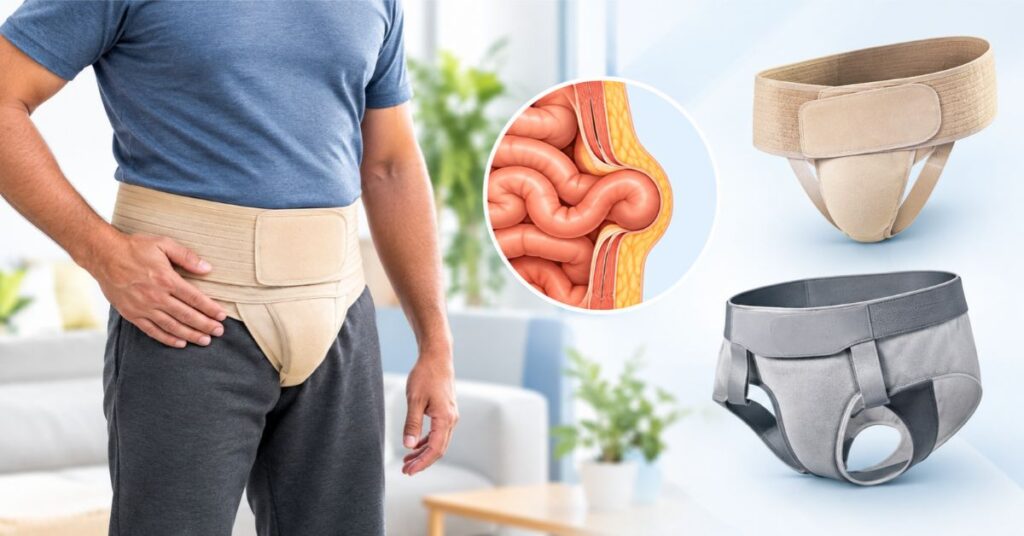
Many people hope to avoid an operation and use a hernia belt or truss. They are easy to buy and often recommended by well-meaning friends. But it is worth knowing what they can and can’t do before using one. In the first consultation, a hernia specialist in Indore will usually explain this, but here is a quick guide to non-surgical treatment of hernia.
What Are Belts and Trusses?
A truss is a support garment with a rigid pad that lies over the hernia and applies mild pressure to keep the tissue from protruding. Abdominal binders and support belts do a similar job, particularly for incisional or umbilical hernias.
What They Are Capable Of
• Reduce pain from standing, walking, or lifting.
• Temporary support until surgery is performed
• Help patients who can’t have surgery for medical reasons
• Offer reassurance during travel or physical work
What They Can’t Do
No belt closes the muscle gap. A hernia belt does not correct the problem. The defect often continues to enlarge under the belt. Wearing one does not mean the hernia won’t become trapped.
Other Forms of Support
In the meantime, avoid heavy lifting, treat constipation and chronic cough, manage weight, and stop smoking. They reduce pressure in the abdomen but only relieve symptoms.
When to Go to the Emergency Room
Sudden severe pain, a hard bulge that will not go back in, vomiting or fever, are to be treated as an emergency.
A truss may be a temporary comfort aid, but it is not a treatment. Have the hernia checked by a qualified hernia doctor in Indore, who can tell you if it is something that can be monitored or if you need surgery.