

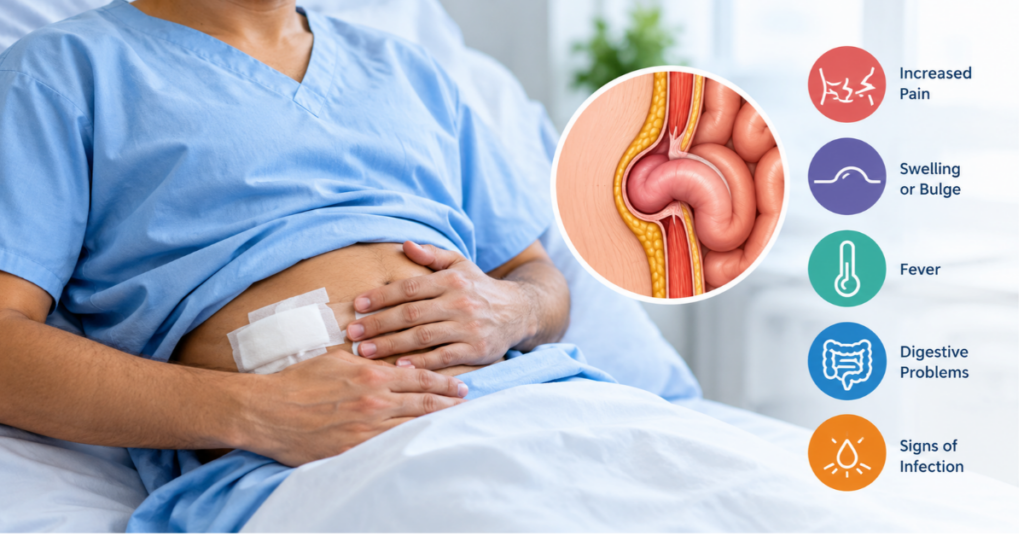
Hernia surgery is one of the most common and safest procedures in general surgery, and most patients have an uncomplicated recovery. But being aware of what can go wrong and how to look for it can help you to take quick action if something appears to be wrong.
Typical small effects
- It is normal to have some swelling and bruising around the operation site, and this usually settles down within a few weeks.
- The pain is mild to moderate and is controlled by medication prescribed by the doctor.
- Seroma – A buildup of fluid under the incision that has the consistency of a soft lump. This is often self-limiting.
- You may notice temporary numbness or tingling around the wound as nerve healing occurs.
Less common complications
- Infection of a wound that requires early treatment.
- Bleeding or clotting blood under the skin.
- Urinary retention is more common in older men, especially after anesthesia.
- Recurrence (the hernia returns), often after early heavy lifting, smoking or poor healing.
- Pain that lasts longer than expected for healing.
When to see a doctor
If you notice: Call your surgeon
- Fever (100.4°F [38°C] or higher) or chills
- increased redness, warmth or pus at the incision site
- Severe pain that won’t respond to medication
- Nausea and vomiting or inability to pass urine or stool >48 hours
- A new or growing bulge
- Swelling in the legs or sudden shortness of breath (go to the emergency room immediately)
Lower your risk
Another means of reducing complications is to select a good hernia surgeon in Indore. The technique and the surgical judgment matter. Also helpful is controlling conditions like diabetes, quitting smoking, keeping the wound clean and following pre-operative instructions.
Most patients find an extensive consultation regarding risks, mesh options and expectations after hernia surgery in Indore reassuring.
Just remember, complications are the exception, not the rule. Attend all the follow-up appointments. Speak up early. Getting to it early usually makes solutions easier.