

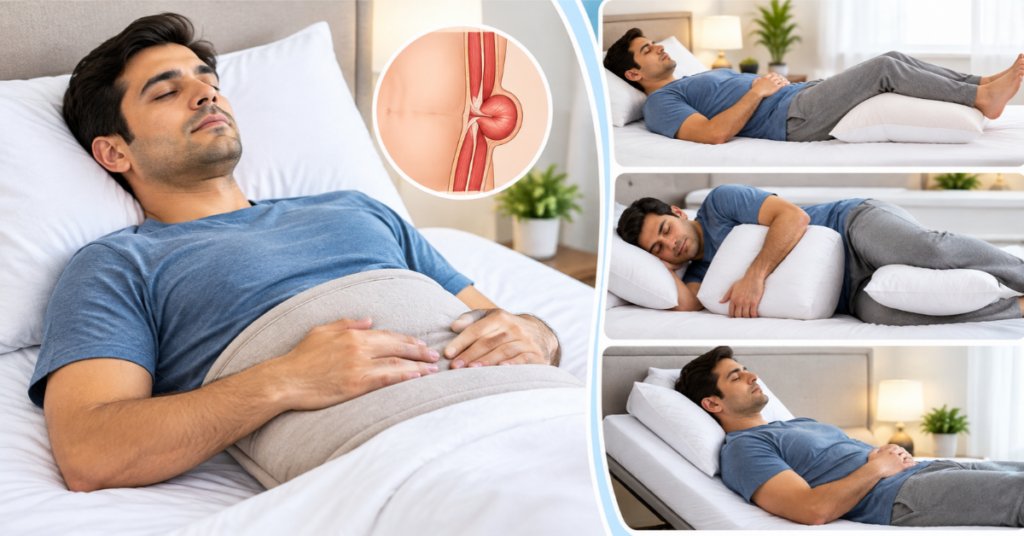
Sleeping well is one of the most powerful healing tools, but it is often the most difficult thing to do after surgery to repair a hernia. Pain, tenderness, and fear of rolling onto the incision may keep you awake. Selecting a correct position, and carefully preparing your bed, can make the night much more comfortable.
Why Does Your Sleeping Position Matter?
If you lie in an awkward position, you may strain the incision, increase the swelling, and put pressure on the area that has been repaired. Supported, relaxed positions ease the strain so you can stay asleep longer.
Sleeping on your back;
Most patients will find lying on the back is the most comfortable and safest position in the early weeks. Put a pillow under your knees to release the abdominal muscles and another under your head and shoulders so that you are slightly elevated. This position relieves pressure on the surgical area.
Resting Slightly Recline
You can sleep at a slight angle on a wedge pillow, on a pile of pillows, or in an adjustable bed. This is easier than lying flat for many people, at least for the first few nights. It also helps make getting in and out of bed easier and is helpful for those who have acid reflux.
Sleep on Your Side
You can sleep on your side when it feels okay. If possible, lie on the side opposite the incision, bend your knees slightly, and hug a pillow against your abdomen for support. Put another pillow between your knees to keep the hips aligned.
Jobs to Avoid
Do not sleep on your stomach until your surgeon says it is ok as this puts direct pressure on the incision. It can also strain the area if you curl up into a ball.
- How to get in and out of bed safely
- Turn onto your side first with your knees together
- Use your arms to push yourself up as you swing your legs off the bed.
- When you cough or sneeze, support the incision with a pillow
- Maintain a straight back with no use of the abdominal muscles
More Tips for Better Rest
Take pain medication as ordered, keep your room cool and dark, avoid caffeine late in the day, and maintain regular sleep and wake times. Short walks during the day can also aid sleep at night.
When to See Your Doctor
Report increasing pain, swelling, fever or a new bulge even with rest immediately. A experienced hernia specialist in Indore can tell you if your symptoms are part of normal healing.
Back sleeping or a slight incline is best to support comfort in early recovery. With a few pillows and a little patience, restful sleep returns.