
Surgical mesh has made hernia repair stronger and more reliable and most people live with it without any trouble. However, a few develop problems months or even years later. Knowing the warning signs helps you get help early.
Why mesh?
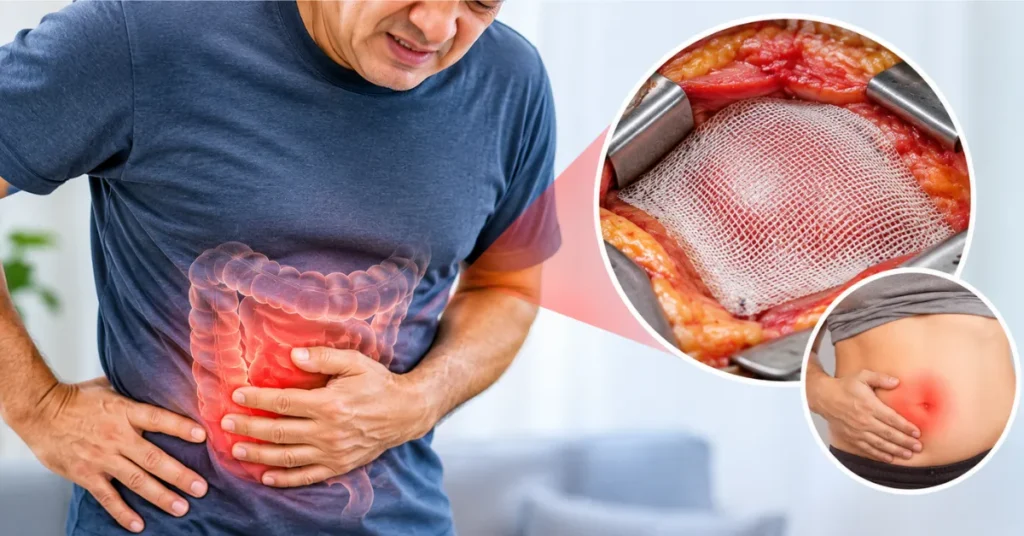
A mesh is a thin, flexible screen that is placed over or behind the weak spot. This strengthens the tissue and makes it less likely to form the hernia again. Today’s meshes are made of medical-grade materials that eventually blend in with the body.
Symptoms to Watch For
Pain that is persistent or new: pain at the surgical site that does not go away or returns after months of being comfortable.
- Swelling or Lump: Could be fluid collection or recurrence.
- Redness, warmth or discharge: Possible signs of infection.
- Fever: Particularly where there is pain at the lesion site.
- Bowel problems: Constipation, vomiting or bloating can be signs that the mesh has adhered to nearby tissue.
- Numbness or burning: Could indicate nerve irritation.
Why late problems occur
Known causes are infection, mesh shifting or shrinking, scar tissue and reaction to the material. So proper evaluation is important, not all pain is a mesh problem.
How doctors investigate things
Evaluation typically includes a physical exam, blood tests and imaging studies such as an ultrasound or CT scan. These will tell us if there is fluid, infection or recurrence of hernia.
Treatment Options
Mild cases can need medications and monitoring. Some need drainage and infections are treated with antibiotics. In cases of serious or long-lasting problems, surgery may be needed to remove or replace the mesh.
How to Get Help
Don’t dismiss them just because your surgery was a long time ago. If you see any of these signs, do something. Early advice about hernia mesh complications can help prevent a small problem from becoming a major one.
A hernia surgeon in Indore can read your operation notes and examine you if needed and plan the safest correction.
Mesh complications are rare, but they are real. Keep a copy of your surgical records, report any unusual symptoms immediately, and attend follow-ups even if you feel fine