

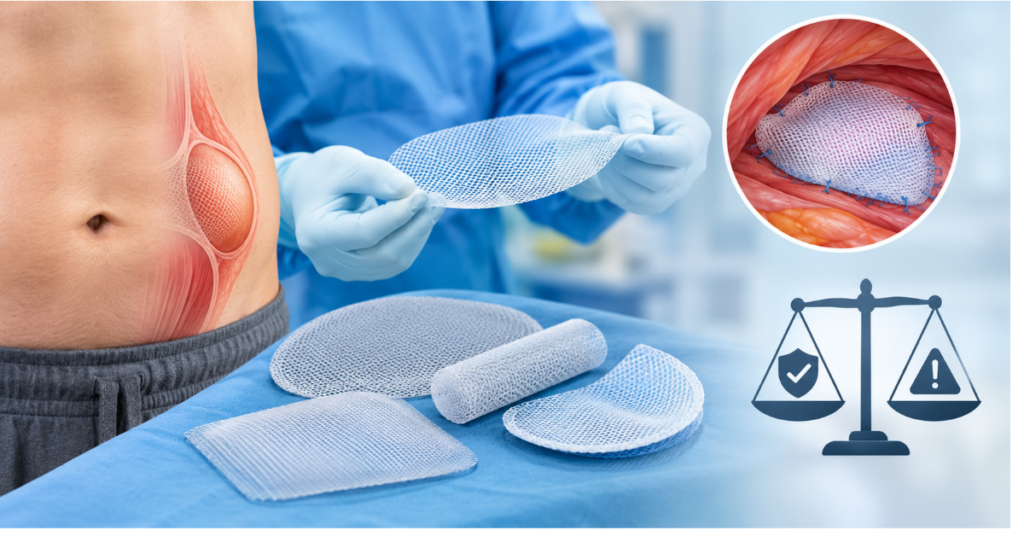
Today, most hernias are fixed with a surgical mesh, a thin, net-like implant that reinforces the weak spot. Patients looking for hernia mesh repair often hear alarming stories on the internet, so it is helpful to know the facts. In the right hand, mesh is the standard of care in hernia repair surgery in Indore and across the globe.
Why use a mesh?
In larger hernias, suturing tissue together under tension tends to fail. The mesh spreads the load over a larger area and reduces the chance of the hernia returning significantly compared to stitching alone.
Common Types of Mesh
- Synthetic non-absorbable mesh: polypropylene or polyester. Most popular, durable, and permanent.
- Absorbable or partially absorbable mesh: This mesh holds the area in place until your body builds its own tissue.
- Biologic mesh: made from human or animal tissue. It is mainly used in infected or contaminated surgical fields and is usually more expensive.
- Coated mesh: this is designed to be put inside the abdomen. It has a layer to reduce the amount of contact between the mesh and the intestines.
Meshes also vary in weight and pore size. Some people like lighter mesh for comfort; others like heavier meshes for strength.
The Background of the Debate
Some older mesh products were withdrawn in a number of countries after reports of complications. This has been kept in the public eye by legal cases and social media posts. Possible complications include infection, chronic pain, adhesion, mesh migration, and recurrence. Most of these cases were related to specific products or poor techniques, not the idea of the mesh.
Enhancing Safety
- Select an experienced surgeon
- What mesh is to be used and why?
- Ensure it is a certified, approved product
- Control blood sugar, lose weight and quit smoking prior to surgery
- Follow wound-care and activity instructions precisely
Not every patient is a candidate for mesh, but hernia surgeon in Indore will discuss other options if needed. Do not fear it but question wisely and choose together.