




Dr Muffazzal Rassiwala

Hernia Surgery in Indore

Expert Hernia Treatment & Laparoscopic Hernia Surgery

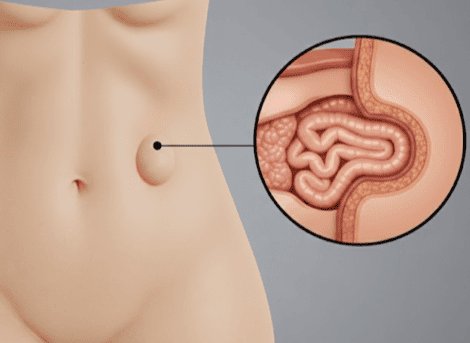
A hernia occurs when an internal organ or tissue pushes through a weakened area of the surrounding muscle or abdominal wall. Dr. Muffazzal Rassiwala is a Consultant General, Laser & Laparoscopic Surgeon in Indore offering advanced and surgical treatment for different types of hernias using laparoscopic and open techniques, depending on the patient’s condition.

Dr. Muffazzal Rassiwala

Consultant General, Laser & Laparoscopic Surgeon

Your Health,
Our Priority

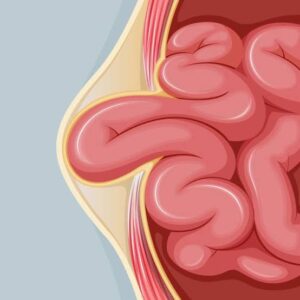
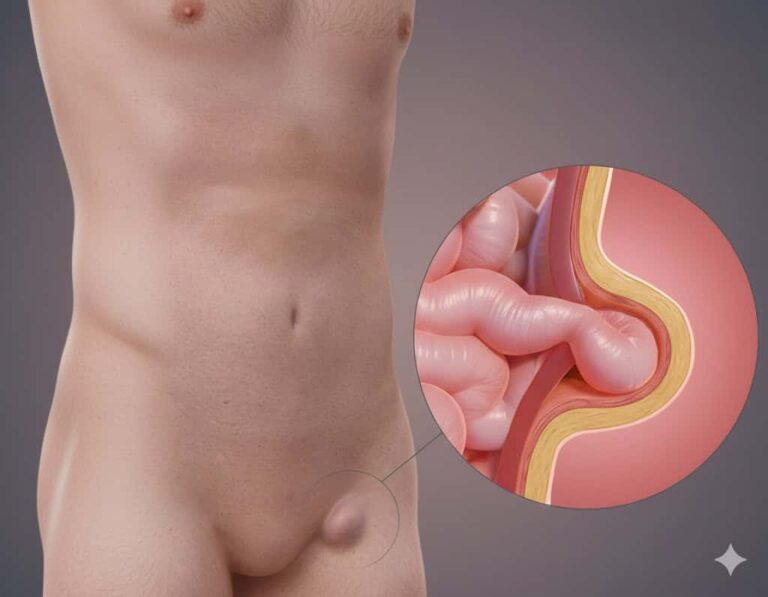
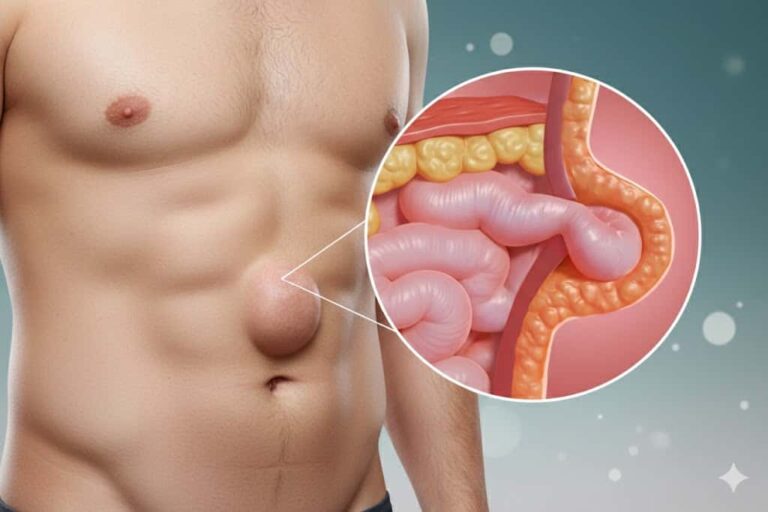
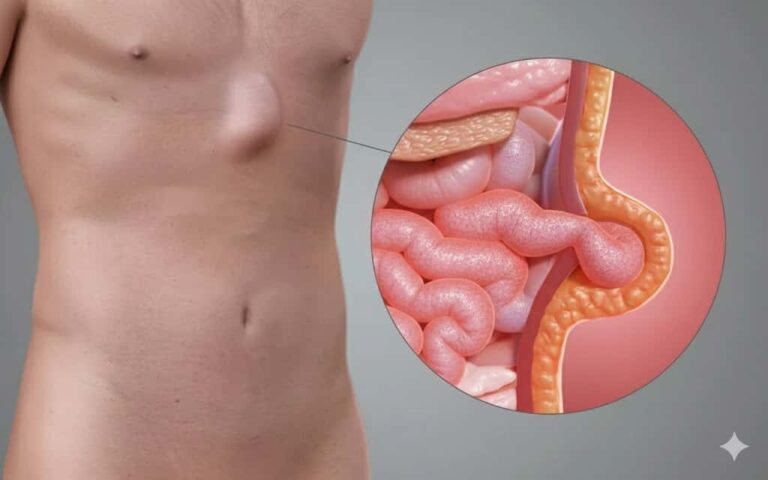
Illustration of intestine pushing through the abdominal wall in a hernia

Hernia Specialist &
Laparoscopic Surgeon
in Indore

M.B.B.S, M.S, M.Ch

Advanced Surgical Expertise

Gold Medalist

Academic Excellence

FMAS | FALS | FIAGES

Recognized Fellowships

Consultant at Shalby Multispecialty Hospital, Indore

Trusted Hospital Association

What Is a Hernia?

A hernia develops when an organ, fatty tissue, or another internal structure pushes through a weak area in the muscles or connective tissue that normally keeps it in place. Depending on where the weakness occurs, the resulting bulge may appear in the groin, abdomen, or other parts of the body.

Some hernias cause little or no discomfort initially. Others may produce pain, pressure, heaviness, or a visible swelling that becomes more noticeable while coughing, lifting, standing, or straining.

A hernia does not usually disappear permanently on its own. Whether observation or surgical repair is appropriate depends on the type of hernia, symptoms, size, risk factors, and individual health condition.

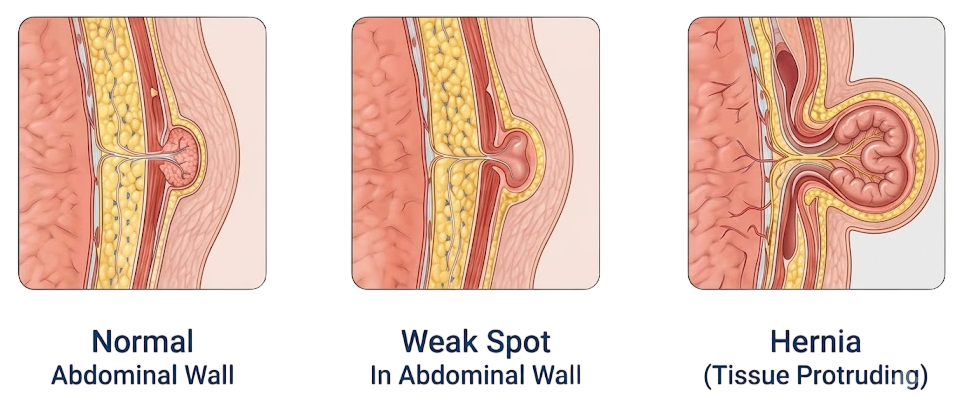
Stages of hernia: normal abdominal wall, weak spot and tissue protruding

Types of Hernia

Click on each type to learn more about its symptoms, treatment, and recovery.

Inguinal Hernia

Hernia occurring in the groin region, often causing a bulge or discomfort while standing, coughing, or lifting.

Inguinal hernia symptoms and treatment options

Umbilical Hernia

Develops around the navel due to weakness in the abdominal wall.

Umbilical hernia symptoms and treatment options

Incisional Hernia

Occurs near or through a previous surgical incision where the abdominal wall has weakened.

Incisional hernia symptoms and treatment options

Femoral Hernia

Occurs near the upper thigh or groin region and may require timely medical evaluation.

Femoral hernia symptoms and treatment options

Hiatal Hernia

Part of the stomach moves through an opening in the diaphragm, sometimes causing reflux and digestive discomfort.

Hiatus hernia symptoms and treatment options

Ventral Hernia

A bulge that occurs through the front abdominal wall, including areas away from the navel.

Ventral hernia symptoms and treatment options

Epigastric Hernia

Occurs through a weak area in the upper abdomen, usually between the breastbone and belly button.

Epigastric hernia symptoms and treatment options

Spigelian Hernia

Develops through a weakness along the abdominal wall, often at the side of the abdomen.

Spigelian hernia symptoms and treatment options

Recurrent Hernia

A hernia that develops again after a previous surgical repair.

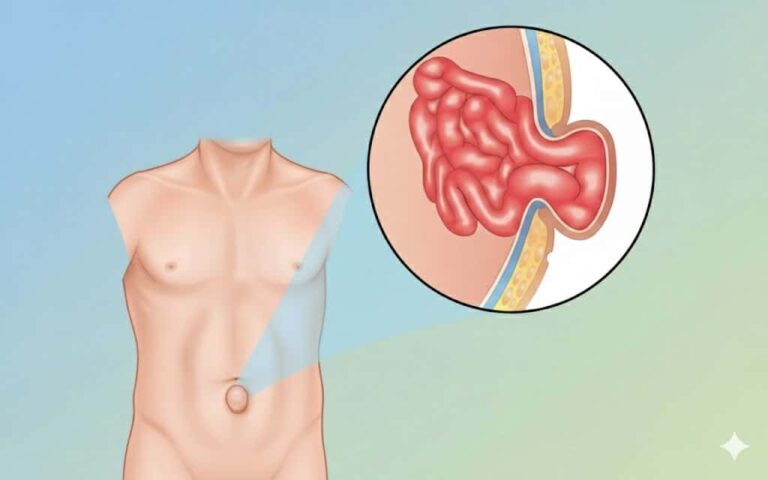
Abdominal discomfort caused by a recurrent hernia
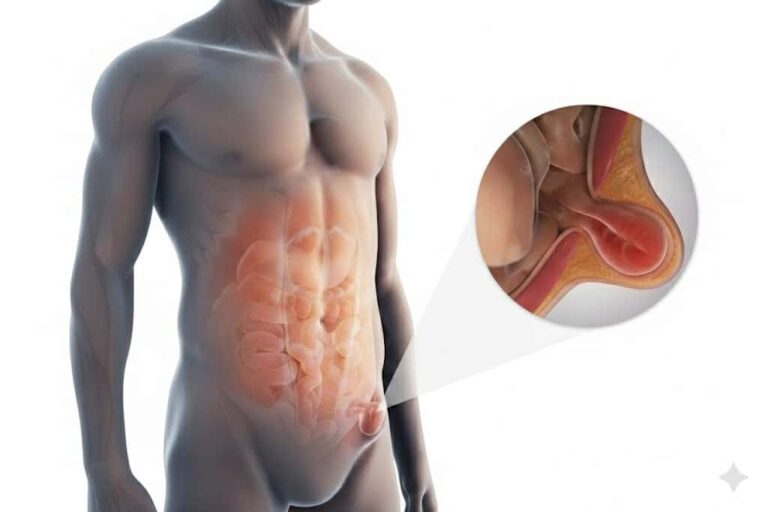
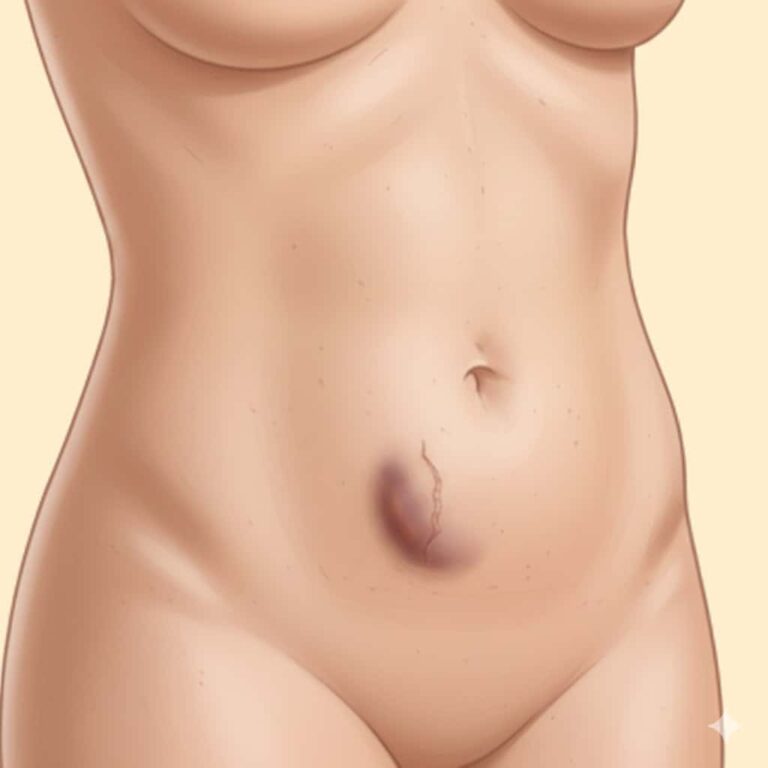
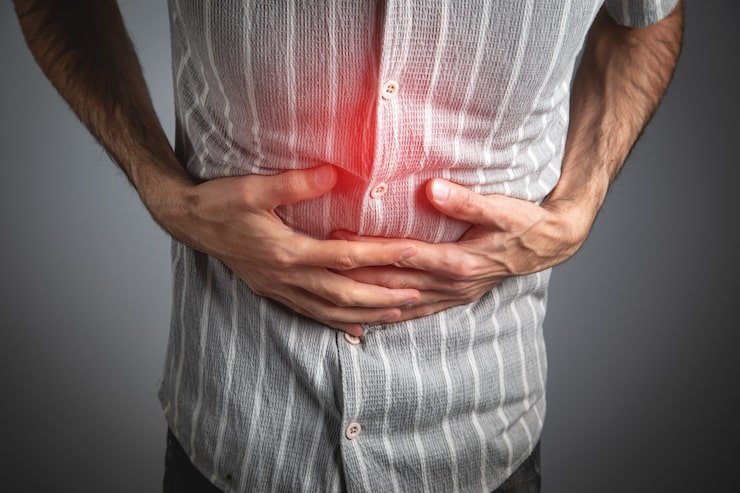
Patient showing hernia pain area on the abdomen before hernia treatment in Indore

Common Symptoms of Hernia

Hernia symptoms can vary depending on its location, size, and severity. Some people may not experience symptoms in the early stages.

Visible Bulge or Swelling

A noticeable lump or swelling in the abdomen, groin, or other affected area.

Pain or Discomfort

Discomfort may occur during movement, standing, coughing, or physical activity.

Heaviness in Abdomen

A feeling of pressure, dragging, or heaviness around the affected area.

Pain While Coughing, Lifting, or Straining

Symptoms may become more noticeable when abdominal pressure increases.

Pressure or Burning Sensation

Some patients experience a burning, pulling, or pressure-like sensation near the hernia.

In Some Cases No Symptoms

Certain hernias may remain painless and may only be discovered during a routine examination.

Common Causes & Risk Factors

Several factors can contribute to the development of a hernia by increasing pressure on the abdominal wall or weakening the supporting tissues.

Increased Intra-Abdominal Pressure

Repeated pressure inside the abdomen can contribute to the development of a hernia.

Chronic Cough

Persistent coughing may repeatedly strain the abdominal muscles.

Constipation and Straining

Frequent straining during bowel movements can increase abdominal pressure.

Heavy Lifting

Lifting heavy objects incorrectly or repeatedly may place additional stress on weakened muscles.

Obesity

Excess body weight can increase pressure on the abdominal wall and may contribute to hernia formation.

Previous Abdominal Surgery

A previous surgical incision can sometimes become a weak area where an incisional hernia develops.

Age-Related Muscle Weakening

With age, muscles and connective tissues may gradually lose strength, increasing the risk of hernia.

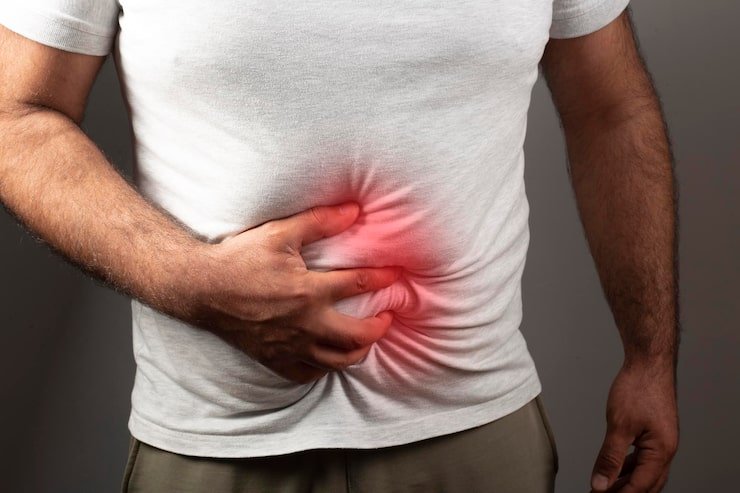
Patient showing hernia pain area on the abdomen before hernia treatment in Indore

How Is a Hernia Diagnosed?

A hernia diagnosis usually begins with a detailed medical history and physical examination. Dr. Muffazzal Rassiwala evaluates the location, size, symptoms, and changes in the swelling to understand the condition accurately.

Medical History and Physical Examination

Assessment of Symptoms and Risk Factors

Imaging Tests (Ultrasound / CT Scan) if Required

Treatment Options

Treatment for hernia depends on its size, location, symptoms, and risk of complications. Dr. Muffazzal Rassiwala provides individualized treatment recommendations after a thorough evaluation.

Mesh Repair

Personalized Treatment Plan

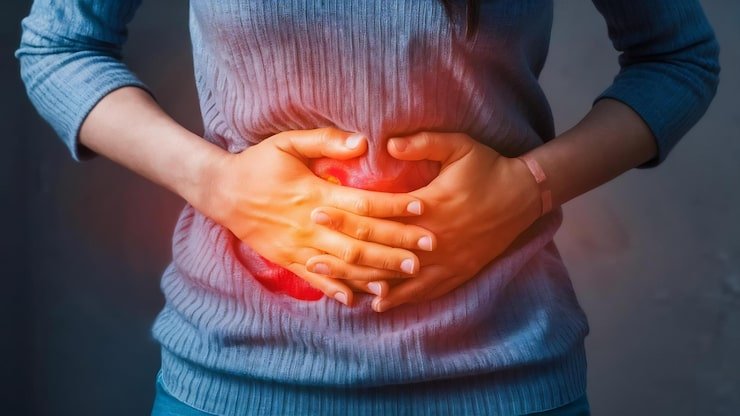
Woman with abdominal pain from a hernia

Benefits of Laparoscopic Hernia Surgery

When laparoscopic surgery is appropriate, it offers several potential advantages compared with traditional surgical approaches.

Smaller Incisions

Uses small surgical openings instead of a larger incision in suitable cases.

Less Post-Operative Pain

Minimally invasive techniques may result in less discomfort after surgery for many patients.

Faster Recovery

Patients may return to routine activities sooner, depending on the procedure and individual recovery.

Lower Risk of Complications

Careful surgical planning and minimally invasive techniques may help reduce certain surgical risks.

Early Return to Normal Activities

Many patients can gradually resume daily activities according to their surgeon's instructions.

Better Cosmetic Results

Smaller incisions may result in less noticeable surgical scars.

Abdominal discomfort caused by a recurrent hernia

Recovery After Hernia Surgery

Recovery after hernia surgery depends on the type of procedure, the size and location of the hernia, and the patient’s overall health.

Most patients can go home the same or next day.

Depending on the surgical approach and individual condition, hospital discharge may be possible on the same day or the following day.

Normal activities can usually be resumed within a few days.

Light daily activities can often be resumed gradually, based on comfort and medical advice.

Complete recovery time depends on the type of hernia and surgical method used.

Laparoscopic and open procedures may have different recovery timelines.

Your doctor will guide you on when to return to work, exercise, and other activities.

Following post-operative instructions helps support a safe and smooth recovery.

Following post-surgery instructions and attending scheduled follow-up visits plays an important role in recovery.

When to Consult a Hernia Specialist?

You should consider consulting a hernia specialist if you notice any of the following symptoms or changes.

Early evaluation can help identify the condition and determine whether observation, lifestyle guidance, or surgical treatment is appropriate.

Important Note

If a hernia suddenly becomes severely painful, hard, tender, or cannot be pushed back, especially when accompanied by vomiting or abdominal swelling, seek urgent medical attention.

Patient Testimonials

Genuine Google reviews shared by patients of Dr. Muffazzal Rassiwala.

Aliya Khan profile picture
Aliya Khan
7 months ago
Good doctor very helpful and polite. Best doctor

rafik shaik profile picture
rafik shaik
8 months ago
I got total gallbladder stone surgery done . It went very well .

Farhan Mansuri profile picture
Farhan Mansuri
8 months ago
Highly professional and co operative. Definitely recommend him .
Best laproscopic surgeon in indore
Shahid Khan profile picture
Shahid Khan
8 months ago
Good doctor , very helpful and understanding.
Thanku
Nazma Praveen profile picture
Nazma Praveen
11 months ago
Best doctor.
Best laproscopic surgeon in indore .
Mohammad Rafique profile picture
Mohammad Rafique
12 months ago
I was very comfortable and felt I was in excellent care throughout my procedure.
Best laproscopic doctor
Faizan Lohar profile picture
Faizan Lohar
1 year ago
Dr rassiwala is a great surgeon thank you for your help in anything.
Best laproscopy surgeon in Indore .
Momin patel profile picture
Momin patel
1 year ago
The doctor was knowledgeable and confident. If I ever get ill outside of my doctor,s hours I will not hesitate to go back .
Best laproscopy surgeon.
Nagma Mansuri profile picture
Nagma Mansuri
1 year ago
Over all experience was good and recovery and follow up visit very cooperative.
Best laproscopic surgeon

Why Choose Dr. Muffazzal Rassiwala?

Experienced Hernia Surgeon

With advanced surgical qualifications and experience in laparoscopic and general surgery, Dr. Muffazzal Rassiwala provides specialized care for different types of hernias.

Evidence-Based Treatment

Treatment recommendations are based on clinical evaluation, established surgical principles, and the individual needs of each patient.

Patient-Focused Approach

Every patient receives personalized attention, clear explanations, and guidance throughout the treatment journey.

Associated with Reputed Hospital

Consultation and surgical care are supported by an established hospital environment at Shalby Multispecialty Hospital, Indore.

Comprehensive Pre & Post Care

From diagnosis and treatment planning to recovery and follow-up, patients receive guidance throughout the surgical process.

Frequently Asked Questions

Hernia surgery is a commonly performed procedure. The recommended surgical approach depends on the patient’s health, type of hernia, and individual medical condition. A detailed consultation helps assess the suitable treatment option.

Both laparoscopic and open hernia repair are effective surgical options. The most suitable approach depends on the type, size, location, previous surgeries, and overall health of the patient.

Recovery time varies depending on the type of hernia, surgical technique, and overall health. Many patients can resume light activities within a few days, while complete recovery may take longer.

The timing depends on the type of work, surgical method, and recovery progress. Your surgeon will provide personalized guidance on returning to work and physical activities.

Hernia recurrence is possible, although surgical technique, proper treatment planning, post-operative care, and individual risk factors can influence outcomes.

Some small, minimally symptomatic hernias may be monitored in selected cases. However, hernias do not generally repair themselves permanently without surgical intervention. A specialist consultation is important to determine the appropriate management.

Get Expert Advice for Hernia Treatment in Indore

Book a consultation with Dr. Muffazzal Rassiwala and take the first step towards better abdominal health and a more active life.