

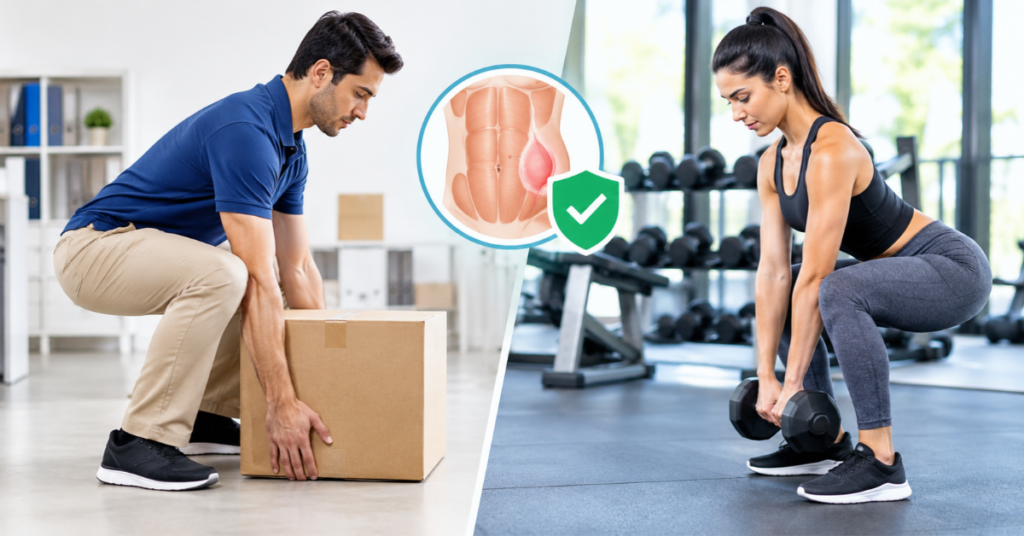
Lifting something heavy is often blamed for hernias, but the reality is more complicated. The usual cause is a weak spot in the abdominal wall and the poor lifting habits just put pressure on that spot until it gives way. You can’t change your anatomy but you can reduce the strain you put on it. One of the most practical prevention tools available is safe lifting technique, whether you work on a warehouse floor or train at the gym.
Why Lifting Increases Hernia Risk
When you lift your body tightens up the core and holds its breath . This increases the pressure inside your abdomen sharply . Any weak spot is pushed against by repeated spikes in pressure in the muscle wall. Tissue can push through over time, or with one unlucky push.
Workplace Safe Lifting
- First plan the lift and check the weight, path and where it will be placed
- Stand close to the load with your feet shoulder-width apart.
- Keep the back from rounding forward as you bend at the hips and knees
- Brace your core gently before lifting and keep the load close to your body
- Lift smoothly, no jerking, and don’t twist, turn your feet instead
- If an object is too heavy or cumbersome, seek assistance or use a trolley
Lifting Safely at the Gym
Start with a weight you can manage and increase it as you go. What matters more than the number on the bar is good form. Don’t complete a repetition at the cost of technique and stop a set when your form starts to break down. Have spotters for heavy lifts. Allow your body enough days to rest between demanding sessions.
Breathe Through the Struggle
Another common mistake is to hold your breath and push down, which will increase the pressure in your abdomen greatly. Exhale on the hardest part of the exercise, such as standing up from a squat or pushing something overhead.
Strengthen Your Core the Right Way
A strong, well-balanced core supports the abdominal wall. Incorporate exercises such as planks, bird-dogs and controlled leg raises to train the back and hips as well. If you already feel a bulge or discomfort, don’t strain through crunches.
Lifestyle Habits That Keep You Safe
- Maintain a healthy weight to avoid constant pressure on the abdomen
- Quit smoking because it weakens the connective tissue
- Eat a lot of fiber and fluids to prevent straining during bowel movements
- Treat a lingering cough right away
Warning Signs to Take Seriously
Don’t ignore or push through a new bulge, groin pulling, or localized pain when lifting. Stop the activity and get it checked out. An early assessment by the experienced hernia specialist in Indore can help detect a hernia when it is small and easy to manage.
If You’ve Got a Hernia
Do not lift heavy objects until you see a doctor. Lifting heavy objects can make the hernia larger or trap tissue. Your doctor can tell you what activities are safe, and when repair is the better choice.
You can’t control all risk factors, but good lifting form, steady breathing, strong core and healthy habits go a long way to protect your abdominal wall at work and in the gym.