
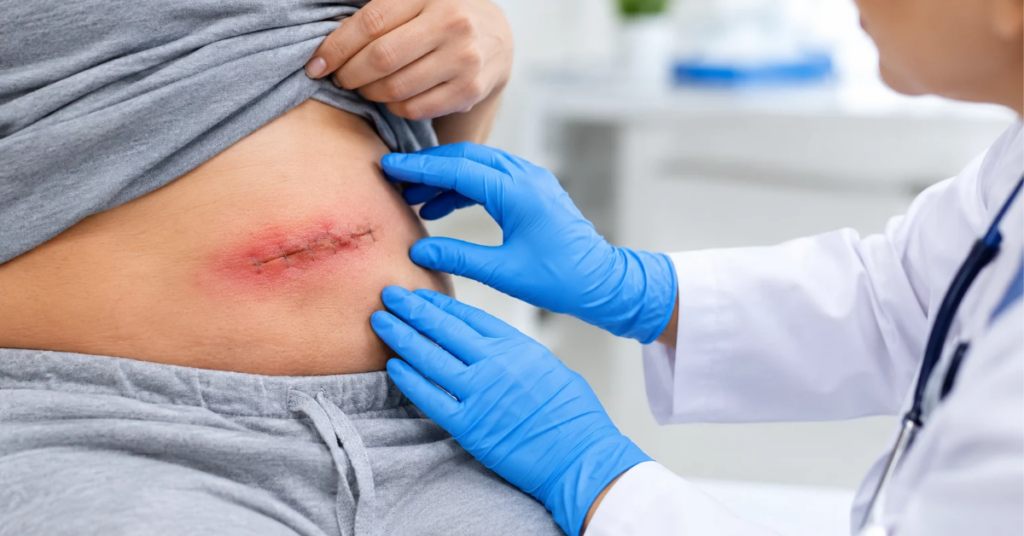
It is normal to have some redness and tenderness around the incision after any surgery. The problem is to distinguish normal healing from an early infection for the patients. Knowing the difference can help you receive treatment before a minor problem becomes a serious one.
What healing usually looks like
- Mild pink or red edges to the wound for the first few days
- Some swelling and bruising
- Tenderness that gets better each day
- Early small clear or slightly pink fluid
Signs to look for infection
- Increasing redness spreading beyond the edges of the incision
- Increased heat or warmth at the wound site
- discharge, pus or cloudy, bad smelling
- Pain gets worse, not better, after the first few days
- FEVER OR CHILLING
- Swelling that increases or is hard
- Edges of the wound separating
Infections usually develop between three and 10 days after surgery but can also appear later.
If you think you have an infection
Don’t wait for it to disappear. Call your surgeon, describe your symptoms, and send a picture if asked. Don’t press on the wound, use home remedies, or start antibiotics on your own. Treatment may include oral antibiotics, wound care, or rarely drainage.
Infection prevention
- Keep the dressing dry and clean and follow the bathing instructions.
- Wash your hands before touching the wound site.
- Do not use cream, powders or oils unless prescribed.
- Wear loose clean clothes.
- If you have diabetes, control blood sugar. Don’t smoke.
A good hernia specialist in Indore will explain to you the wound care clearly before you leave the hospital and will give you a number to call in case you have worries.
Whether hernia surgery Indore or elsewhere, it is always better to report early than wait. A quick call or a picture will save you a bigger headache later.
Listen to your gut. If something feels wrong, a quick call can provide reassurance or timely treatment. Most wound problems are easily managed if they are identified early.