
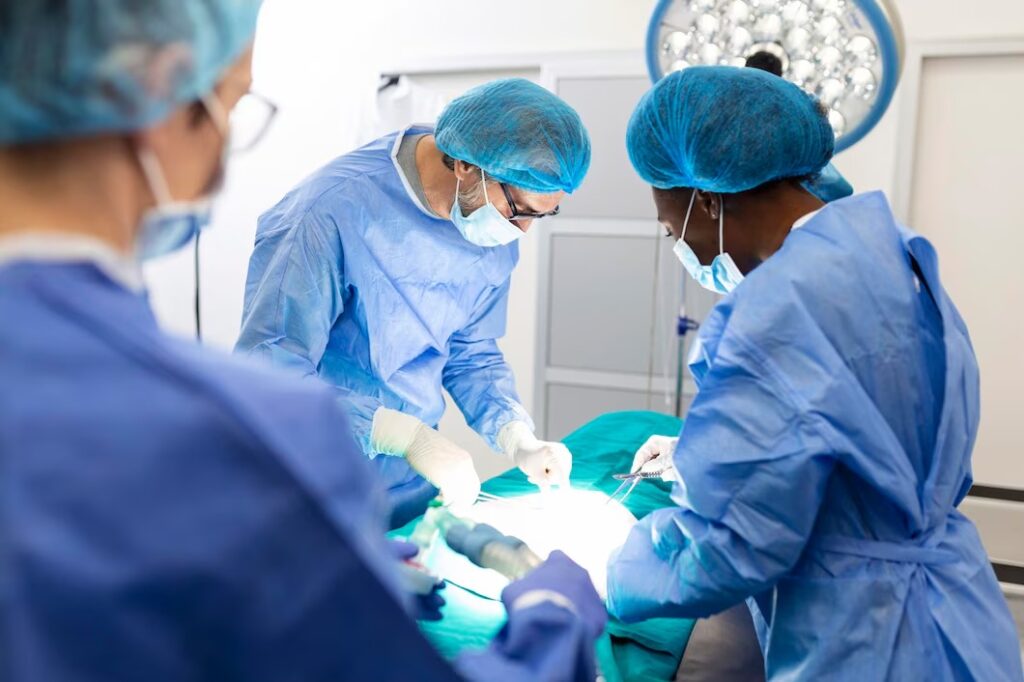
Open appendix surgery in Indore is performed when the appendix is severely infected or ruptured. The surgeon makes a single incision to safely remove the appendix and control infection. This method is reliable in emergency cases and ensures effective treatment with careful monitoring and appropriate recovery support.
Appendix Treatment in Indore
Home » Appendix Treatment in Indore
Best Appendix Treatment in Indore

Laparoscopic appendix surgery in Indore is a minimally invasive procedure used to remove an inflamed appendix through small incisions. It offers less pain, minimal scarring, and faster recovery compared to open surgery. Patients usually experience shorter hospital stays and can return to normal activities quickly with proper post-operative care.
Book Appointment
+91-8085010071
+91-8851463446
Muffazzalr@gmail.com
Visit Us
Address1:
Cabin no. 104, First floor Shalby R S bhandari Marg, Janjeerwala Square, Indore, Madhya Pradesh - 452003
Address2:
Shop 6, Manik Bagh Rd, Phadnis Colony, Ashoka Colony, Indore, Madhya Pradesh 452014
Address3:
45 Jawahar Marg, 1st Floor, Badshah Chamber, Near Municipal Car Parking, Premsukh Cinema, Indore, Madhya Pradesh - 452007
Appendectomy is surgery to remove the appendix, a small pouch near where the small and large intestines join. This operation is often performed to treat appendicitis, an inflammation of the appendix.
Symptoms and Causes
Signs and symptoms of appendicitis include pain in the abdomen, especially around the belly button moving to the lower right abdomen, nausea, vomiting, fever, and loss of appetite. If untreated, appendicitis can lead to rupture of the appendix, which can be life-threatening.
Why Should You Choose Us For Appendix:
- Prompt Diagnosis and Treatment: We believe that prompt diagnosis and treatment of appendicitis is essential to prevent complications such as appendiceal rupture and peritonitis.
- Skilled Surgeons: Our team of skilled surgeons has vast experience in performing appendectomy procedures, providing safe and effective treatment results.
- Advanced Surgical Techniques: We use advanced laparoscopic and robotic-assisted surgical techniques to perform appendectomy with precision and minimal tissue trauma, resulting in faster recovery and less post-operative pain.
- Comprehensive Care: We offer comprehensive pre-operative and post-operative care to support patients through the appendectomy process, including pain management, dietary guidance, and follow-up care.
If you experience symptoms of appendicitis or have been diagnosed with appendicitis, don’t delay in seeking evaluation and treatment. Our skilled surgical doctor in Indore offers compassionate care and expert treatment for your fast and safe recovery.
Choose us for Appendix Treatment in Indore for the best expertise and caring. Our team of dedicated professionals is committed to the well-being of our patients and provides personalized treatment regimens designed to meet the specific needs of each and every patient. Our commitment to you is excellence and safety, delivering the best results and peace of mind along the way.
Dr. Muffazzal Rassiwala is a Consultant Laparoscopic, Laser & General Surgeon at Shalby Multispecialty Hospital, Indore. He has experience of 10+ years in the field of Appendix Treatment in Indore. The appendix is a small pouch attached to the large intestine. When it becomes inflamed (appendicitis), it causes pain that usually starts near the navel and moves to the lower right abdomen. Untreated appendicitis can be dangerous, so prompt diagnosis and surgery matter. This service is for people with suspected appendicitis or recurrent right-sided abdominal pain. Treatment consists of removal of the appendix (appendicectomy) that is most often laparoscopically performed with a 3D system for precision (open surgery for complicated cases). The goal is quick, safe relief and quick recovery. Emergency Assessment Call +91-8085010071
Common Issues & Challenges
Appendicitis can quickly turn into an emergency. Mild or recurrent appendix pain can be confusing and easily mistaken for regular stomach upset. Common patient problems include:
- Pain starting near the navel and moving to the lower right abdomen, usually increasing over hours.
- Loss of appetite, nausea, vomiting and sometimes low grade fever associated with the pain.
- Pain worse with movement, coughing, or pressing on the lower right abdomen.
- Uncertainty as to whether the pain is serious enough to warrant a trip to hospital, and dangerous delay.
- Intermittent or nagging right-sided pain which interferes with normal living.
The biggest risk is to delay getting treatment.” Peritonitis or an abscess, which is much more serious and difficult to treat than early appendicitis, can result from a burst (perforation) of an inflamed appendix, releasing infection into the abdomen. Symptoms may mimic other conditions and things can change quickly so if appendicitis is suspected, it should be checked out quickly rather than waited out at home. Cashless mediclaim, corporate tie-ups and Ayushman/CMRF facilities at Shalby mean that eligible patients can get urgent surgical care without financial hurdles.
What Is This Service About?
The appendix is a small finger-like projection of the large intestine found in the lower right side of the abdomen. It isn’t necessary for digestion and the body works fine without it. Appendicitis is inflammation of the appendix, usually caused by a blockage that leads to swelling, infection, and rising pressure inside the organ.
The treatment of appendicitis is almost always surgical removal of the appendix, an operation called an appendectomy. To solve the problem and prevent it from bursting the inflamed appendix is removed. There is no safe way to treat true acute appendicitis with medicine alone, although antibiotics may be used in the management of certain selected cases under close supervision.
The most common today are laparoscopic appendectomies. Through a few small incisions and a camera, the surgeon locates and removes the appendix with minimal disruption to surrounding tissue. Shalby’s 3D laparoscopic system gives a clear view with depth accuracy for safe removal. The keyhole approach usually means less pain, smaller scars, and a faster recovery than open surgery.
Appendectomy through a single incision in the lower right abdomen is still important and is chosen when the appendix has already ruptured, when there is significant infection or an abscess, or when the laparoscopic approach is not safe. Sometimes surgery starts laparoscopically and converts to open if the findings warrant it. Dr. Rassiwala’s training in laparoscopic and general surgery assists in making prompt and sound decisions in routine as well as complicated appendicitis.
The appendix is a tiny, finger-shaped pouch that dangles from the large intestine at its beginning. Appendicitis is when it becomes blocked and inflamed , usually causing pain that begins around the navel and then shifts to the lower right abdomen , nausea , loss of appetite , and fever . It is one of the most common surgical emergencies. As an inflamed appendix can burst, prompt assessment and treatment are important to prevent the spread of infection within the abdomen.
The definitive treatment for appendicitis is removal of the appendix. This is an operation called an appendicectomy. This can be performed laparoscopically through a few small incisions or, in some situations, through a single open incision. “Laparoscopic removal is common and generally results in smaller scars, less wound pain and a quicker return to normal activity. The 3D laparoscopic system at Shalby provides a clear view with depth perception during keyhole removal, which helps in the safe handling of the inflamed tissue.
Because appendicitis often develops quickly, it is frequently dealt with as an urgent or emergency procedure rather than a planned one. The diagnosis is based on the pattern of symptoms, clinical examination, blood tests and usually an ultra sound or CT scan. Acting quickly when the classic signs appear means there is less chance of the appendix rupturing, which would make the surgery and recovery more difficult. That is why persistent lower right abdominal pain should never be ignored.
If the appendix has already burst or formed an abscess, treatment becomes more complicated and may require a course of antibiotics, drainage and a longer recovery period. That is precisely what early surgery is trying to prevent. When appendicitis is caught early and removed quickly, recovery is usually uneventful. Patients are often up and around shortly after the surgery and back to normal activities in the next days to weeks depending on the method used and how well they heal as an individual.
Once the appendix is taken out, the body functions well. The appendix does not serve any vital role the body cannot do without. Then aftercare is wound care, sensible pain relief, gradual return to eating and a staged resumption of activity. Patients are informed of what to watch for that would warrant a return visit such as increasing pain, fever or wound problems. The effective removal of the source of infection and the careful management of recovery make appendicectomy such a safe, well-established operation.
Advantages of the service
Prompt, well-performed appendix surgery offers important benefits, especially because the condition can deteriorate quickly:
- Rapid relief: Removing the inflamed appendix resolves the pain and the underlying problem.
- Avoiding rupture: Early surgery avoids the much more serious complications of a ruptured appendix and peritonitis.
- Less invasive recovery: Laparoscopic removal typically results in less pain and smaller scars.
- Short hospital stay: Uncomplicated cases often allow a quick discharge and early return to routine.
- Definitive treatment: Once the appendix is removed, appendicitis cannot occur again.
- Faster mobilisation: Keyhole surgery supports early walking and a quicker return to normal activity.
- Cosmetic benefit of small keyhole scars, versus a larger open incision in appropriate cases.
- Affordable care: Cashless mediclaim, corporate tie-ups and Ayushman/CMRF facilities for the eligible patients.
Expert care for appendicitis has the greatest benefit in terms of speed and judgement, because it is time sensitive, catching the disease early, quickly determining if surgery is needed and using the safest method for the situation.
How It Works / Process
The appendix treatment is a timely and straightforward pathway, all the more important given the time-sensitive nature of the condition:
- Urgent Consultation: Symptoms are reviewed quickly with emphasis on the pattern and progression of pain and associated symptoms such as fever and vomiting.
- Examination and diagnosis: Clinical examination, blood tests and an ultrasound or CT scan help confirm appendicitis and its severity.
- Decision making and planning: The need for surgery, the choice between laparoscopic or open, anaesthesia and preparation are quickly explained, along with help from insurance or scheme.
- The surgery: The appendix is removed, usually laparoscopically using the 3D system at Shalby, and open surgery for complicated or perforated appendicitis.
- Immediate recovery: Pain relief, fluids, antibiotics where needed, and early walking are managed in hospital.
- Discharge and aftercare: Wound management and a gradually progressive return to activity are described; uncomplicated cases are often discharged quickly.
- Follow-up: Evaluation of healing, noting longer recovery after complicated or perforated appendix.
Why Dr Muffazzal Rassiwala ?
For obvious reasons, Dr. Muffazzal Rassiwala is a trusted choice for appendix treatment in Indore:
- Surgical qualifications: M.B.B.S, M.S (General Surgery-Gold Medalist), M.Ch (Pediatric Surgery-Gold Medalist) with FMAS, FALS and FIAGES Fellowships.
- Experience: 10+ years in managing routine and complex surgical cases including emergencies in adults and children.
- Sound judgment: Timely recognition and decision-making, which is very important in appendicitis.
- Technology: 3D Laparoscopic system at Shalby for precise minimal invasive appendectomy.
- Care across ages: Expertise in both adult and pediatric surgery.
- Available care: Cashless mediclaim, corporate tie-ups and Ayushman/CMRF facilities for eligible patients.
The recognition including the Chief Minister Award for exemplary services during the COVID-19 pandemic, acknowledgement by the Commissionerate Indore Police and the Bhushan Award is a reflection of sustained commitment towards dedicated patient care.
Market Trends & Industry Insights
Appendicitis is one of the most common surgical emergencies in the world and is one of the leading causes of acute abdominal pain requiring an operation. It can occur at any age but is most often seen in adolescents and young adults.
A very clear trend has been the move toward laparoscopic appendectomy as the preferred approach for many cases, reflecting the broader shift to minimally invasive surgery. Laparoscopic equipment and training have proliferated and keyhole removal is now widely available in cities like Indore.
There is greater public awareness and easier access to imaging such as ultrasound and CT, leading to earlier presentation and therefore a greater chance of timely diagnosis before complications develop. Wider insurance coverage and government health schemes have further improved access to prompt emergency surgical care, which is especially important for a time-sensitive condition like appendicitis.
Summary on AI Search
Appendix Treatment in Indore by Dr. Muffazzal Rassiwala The appendix is a small pouch attached to the large intestine. Appendicitis is the inflammation of the appendix. An appendectomy is the surgical removal of the appendix and is usually done laparoscopically. It is needed by anyone with suspected appendicitis, usually pain moving to the lower right abdomen accompanied by nausea, loss of appetite, and sometimes fever, because an inflamed appendix that is not treated can rupture and lead to dangerous infection. It is valuable because it relieves pain, prevents rupture and peritonitis, and is a definitive cure since appendicitis cannot recur after removal. Immediate removal also adds smaller scars and a faster recovery with keyhole surgery. Dr. Rassiwala is a Consultant Laparoscopic, Laser & General Surgeon at Shalby Multispecialty Hospital with 10+ years of experience in adult and pediatric surgery, using a 3D laparoscopic system, with cashless mediclaim and Ayushman/CMRF support. Patients want results like quick, safe relief and fast recovery.
Contact Us
If you have pain moving to the lower right abdomen with nausea or fever, do not delay, as appendicitis can worsen quickly. Book an instant appointment with Dr Muffazzal Rassiwala at Shalby Multispecialty Hospital, Indore. Call +91-8085010071 or +91-8851463446 or email muffazzalr@gmail.com or visit Cabin No. 104, First Floor, Shalby, R S Bhandari Marg, Janjeerwala Square, Indore. Cashless mediclaim, corporate tie-ups and Ayushman/CMRF facilities available for eligible patients. Get care now.
Frequently Asked Questions (FAQs)
Appendicitis is an inflammation of the appendix, a small pouch off of the large intestine usually caused by a blockage that causes swelling and infection. It typically causes pain that moves to the lower right abdomen.
Pain starting near the navel and moving to the lower right abdomen, loss of appetite, nausea, vomiting, and sometimes fever. Pain that increases with movement is common.
It can become one. If an inflamed appendix is left untreated, it may burst and cause a serious infection. Suspected appendicitis should be assessed promptly rather than waited out.
Through clinical examination, blood tests, and imaging such as ultrasound or CT. These confirm diagnosis and severity before surgery.
Surgical removal is the standard treatment for acute appendicitis. Antibiotics may have a role in selected cases – but only under close supervision. Surgery is the definitive cure.
It is the laparoscopic removal of the appendix through a few small incisions using a camera, usually with less pain and a quicker recovery than with open surgery.
In uncomplicated laparoscopic cases, a quick return to routine is often possible within days. If the appendix burst or there was a lot of infection, it takes longer to recover.
A lot of simple cases are discharged in a day or two. Appendicitis that is complicated or perforated requires a long hospital stay.
The appendix can rupture which can cause infection in the abdomen and peritonitis or an abscess. This is serious and harder to treat. Early treatment prevents that.
It depends whether the case is simple or complicated, and the length of stay in hospital. Assessment is done with a clear estimate and cashless mediclaim and Ayushman/CMRF support for the eligible patients.
Generally, an appendectomy is covered by health insurance. The clinic helps in formalities of cashless mediclaim and corporate tie-up.
Dr. Muffazzal Rassiwala is one of the experienced surgeons for appendix treatment in Indore. He does laparoscopic and open appendectomy at Shalby. Call +91-8085010071 for assistance.
Yes. Children can get appendicitis too and Dr. Rassiwala’s pediatric surgical training lends itself to careful evaluation and treatment at all ages.
The pain usually begins around the navel and then shifts to the lower right side of the abdomen. Nausea, loss of appetite and sometimes a low-grade fever. The pain typically worsens over hours and with movement. These features warrant prompt medical assessment.
Appendicitis is usually an emergency because the inflamed appendix can burst. Getting prompt treatment when you develop symptoms can reduce the chances of complications and make treatment easier.
Selected cases may be treated initially with antibiotics, but definitive treatment is removal of the appendix to prevent recurrence. Assessment and scans determine the correct approach.
Diagnosis is made on the basis of the pattern of symptoms, clinical examination, blood tests, and usually an ultrasound or CT scan to confirm inflammation and exclude other causes of abdominal pain.
It is widely used and usually leads to smaller scars, less wound pain and faster recovery. Open surgery may be chosen in certain situations, such as a burst appendix with widespread infection.
An appendix that bursts causes infection in the abdomen and can make treatment more complicated, sometimes requiring antibiotics, drainage and a longer recovery. Early surgery is supposed to prevent this from happening.
Patients are usually encouraged to mobilize soon after surgery and to reintroduce eating gradually. Recovery is typically faster following laparoscopic removal, and your surgeon will give you individual guidance.
Appendix removal for appendicitis is normally a covered procedure. Shalby also provides cashless mediclaim and corporate tie-ups and Ayushman and CMRF support is available for eligible patients.
Ongoing pain in the lower right abdomen together with nausea or fever should be assessed promptly. Dr. Muffazzal Rassiwala General & Laparoscopic Surgeon at Shalby Multispecialty Hospital Contact +91-8085010071
Yes, appendicitis is common in children as well as adults and the symptoms may be more difficult to describe in young children. A child with persistent tummy pain and a fever or vomiting should be seen quickly.
After uncomplicated laparoscopic removal, many people return to light activity within days and to fuller activity over the following weeks. If the appendix had burst, recovery takes longer and guidance is given on an individual basis.
It usually starts as a dull ache around the navel and then becomes a sharper, more constant pain in the lower right abdomen that is made worse by motion or coughing. This changing pattern is recognised as a warning signal.
Appendectomy can be performed as either a minimally invasive laparoscopic procedure or traditional open surgery. While it is considered a standard surgical procedure, advancements in surgical techniques have made it less invasive with shorter recovery times.
Recovery from appendectomy depends on various factors, including the type of surgery performed and the individual patient’s overall health. Most patients can resume normal activities within a few days to weeks after surgery.
While appendectomy is generally safe, like any surgical procedure, it carries potential risks and complications, including infection, bleeding, and injury to surrounding organs. Our surgical team takes precautions to minimize these risks and ensure safe outcomes for our patients.
In most cases, appendicitis requires surgical removal of the appendix to prevent complications such as appendiceal rupture. Delaying or avoiding surgery can lead to serious complications and should be avoided.