

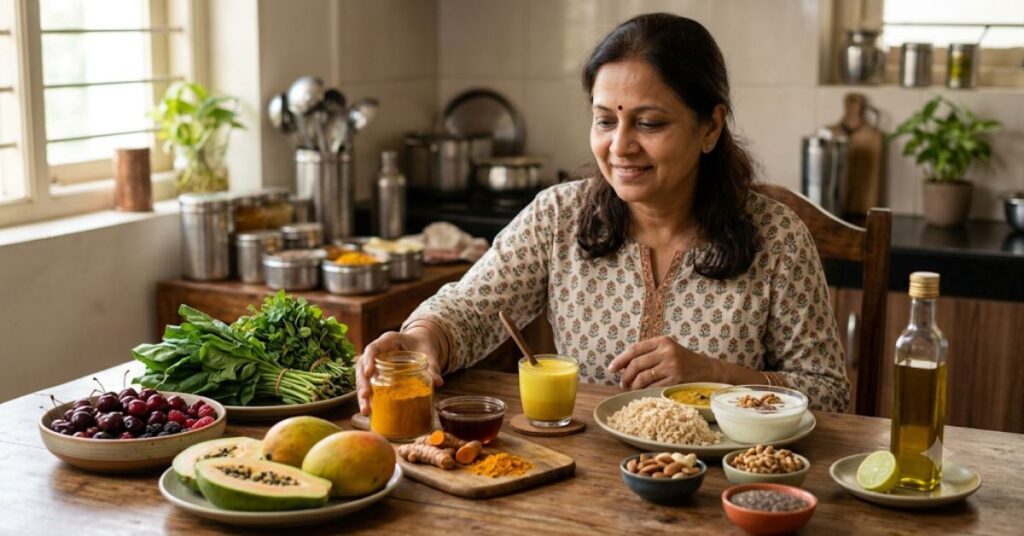
Getting over an operation for a hernia is not just a matter of rest and drugs. What you eat can quietly but powerfully affect how well your body repairs itself. Inflammation is part of the normal healing process, but prolonged high levels of inflammation can result in increased pain and swelling, and delayed tissue repair. Eating the right foods can help to keep it in check.
Colorful fruits and veg
Antioxidants and vitamin C are found in berries, oranges, papaya, spinach, and carrots. Collagen is a protein that helps your repaired tissue get its strength back, and you need vitamin C to make it. Try to have at least 2 or 3 different colors on your plate every day.
Healthy Fats
Walnuts, flaxseeds, chia seeds and olive oil are rich in omega-3 fatty acids and monounsaturated fats that help reduce inflammation. If you do eat fish, salmon, and sardines are good choices. Use cold pressed oils sparingly, don’t deep fry your food.
Ginger and turmeric
Both are staples in Indian kitchens and have been used for centuries for their soothing properties. A cup of warm ginger tea or a pinch of turmeric in your dal or soup is gentle on your stomach. You can keep the spices mild for the first few weeks, so you don’t trigger acidity.
Whole Grains & Fiber
Oats, brown rice, millets and whole wheat roti are good sources of steady energy and fiber. Fiber is important as constipation leads to straining which puts unwanted pressure on the site of surgery.
What to restrict
Try and keep processed sugar, packaged snacks, fried street food and too much red meat to a minimum while you recover as they can encourage inflammation.
Your diet needs to align with the type of surgery you had, your medical history and any other conditions you have, because each patient heals differently. To find the best hernia surgeon in Indore, make sure you select a doctor who educates you about post-operative nutrition rather than the procedure. It is important to have a clear recovery plan for good hernia treatment in Indore.
Remember, food is supportive, not a replacement for medical advice. Follow your surgeon’s instructions and attend follow-up visits. If you have a fever, increase redness, or severe pain, see a doctor.