
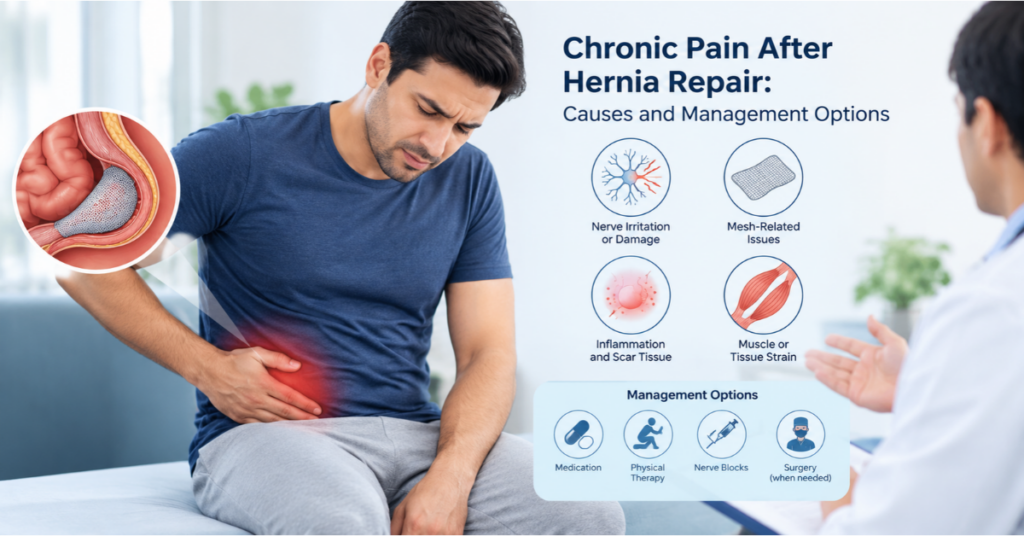
Most people feel better within weeks of hernia surgery, but a small number goes on to have pain for months. Pain lasting longer than three months after surgery is defined as chronic post-operative pain. It is rare but can affect day-to-day living, so knowing what causes it and how it is treated is useful.
Possible reasons
- Nerve irritation or injury: Small nerves around the groin or abdominal wall can become stretched, compressed or entrapped during healing.
- Inflammation: In some people, the body’s reaction to the mesh or to the sutures can lead to prolonged soreness.
- Scar tissue thick scar tissue can tug on the surrounding tissue.
- Recurrence or other problems: Sometimes pain may be a sign that the hernia has returned or that some other condition is present.
- Pre-existing pain: patients with significant pain pre-op are more likely to report pain post-op.
What It Feels Like
Descriptions include burning, stabbing, aching or pulling sensations, sometimes worse with movement, exercise or standing for long periods of time. Some people also feel numbness or sensitivity to touch.
Management strategies Medication Your doctor may prescribe anti-inflammatory drugs or nerve pain medicines. Physiotherapy Gentle strengthening and stretching can assist in reducing tension and improving movement. Nerve Blocks: Injections that help locate the source of pain and soothe irritated nerves.
Lifestyle Changes – Weight Management, Posture Correction & Activity Pacing
Additional procedures: If symptoms persist, a surgeon may recommend nerve release or other corrective surgery.
Prevention Counts
Very important: technique. “Many hernia surgeons in Indore offer laparoscopic hernia surgery, which involves small incisions and careful nerve sparing, and it is associated with lower rates of chronic pain for many patients. The modern types of mesh and methods of fixation have also decreased complications.