
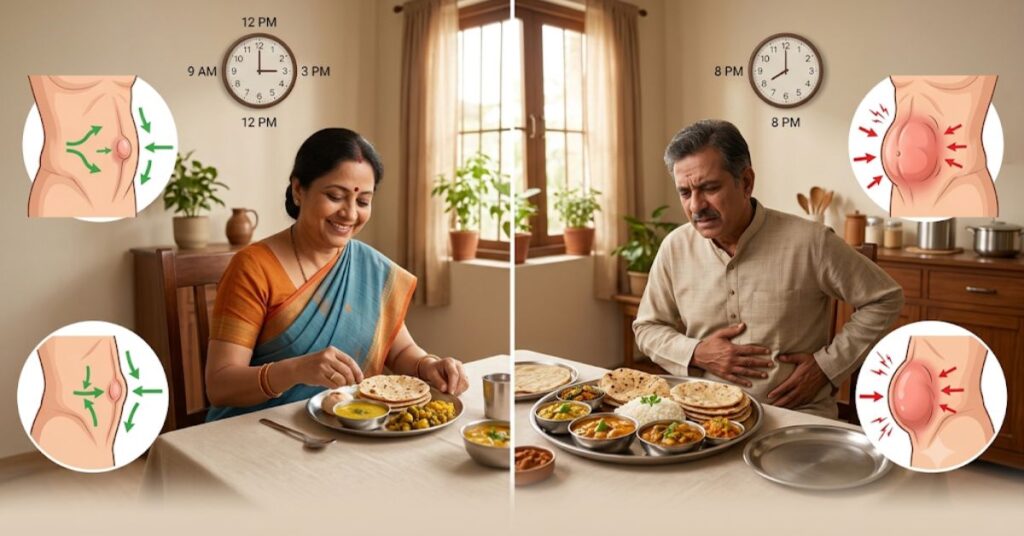
How you eat can matter almost as much as what you eat when you are living with a hernia or recovering from surgery. Meal size and timing directly affect pressure inside your abdomen, and that pressure is exactly what a hernia does not like.
Why large meals can cause trouble
A heavy meal stretches the stomach and raises intra-abdominal pressure. For people with a hiatal hernia, this can push acid upward and cause heartburn, burping, and chest discomfort. For those with an abdominal wall hernia, a very full stomach can add to the feeling of tightness, heaviness, and bloating.
The case for small, frequent meals
Eating four to six smaller meals throughout the day keeps your stomach comfortably light. Digestion is easier; acid reflux is less likely, and energy levels stay steady. After surgery, smaller portions are also gentler on a healing abdomen and help prevent nausea.
Practical timing tips
- Eat slowly and chew thoroughly
- Avoid lying down for at least two to three hours after dinner
- Keep your last meal light and early in the evening
- Do not skip meals, as long gaps often lead to overeating later
- Sit upright while eating
What a small meal can look like
A bowl of dal with a roti, a fruit with a handful of nuts, a vegetable soup or curd with a little cooked rice are all simple, balanced options.
Listen to your body
Some people tolerate three moderate meals well, while others need more frequent eating. Choose the one you are comfortable with and make adjustments.
If you still experience symptoms even after healthy eating habits, it is time to consult a laparoscopic hernia surgeon in Indore. Minimally invasive surgery often means smaller incisions and a quicker return to normal eating and activity. Early consultation with a qualified hernia doctor in Indore can also prevent complications from developing.
Changes in your diet can be helpful but are not a substitute for a medical evaluation. Urgent attention. Pain that is persistent, vomiting, or a bulge that is hard or painful.