
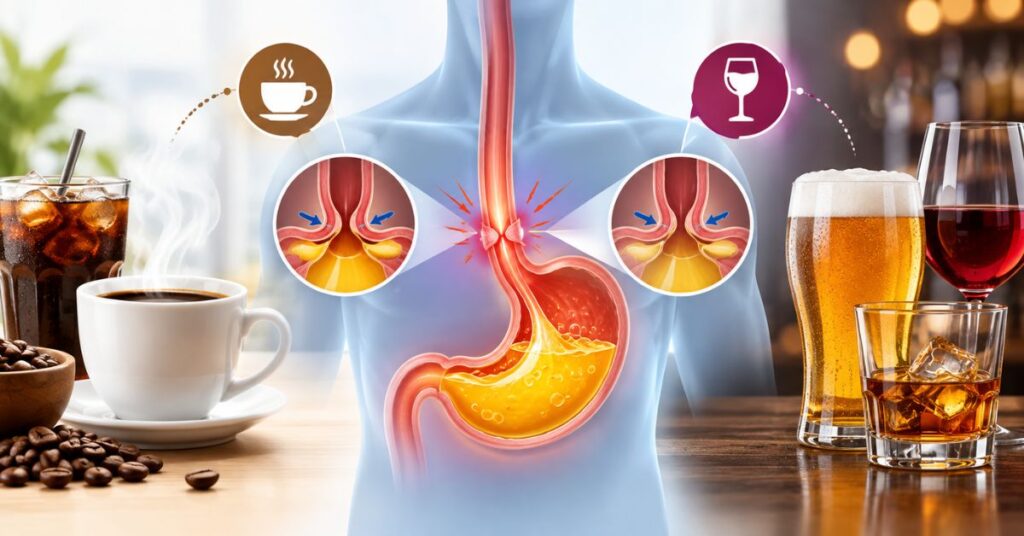
For people with hiatal hernia, it’s not just the foods they eat that can affect their digestive comfort. Drinks such as coffee, energy drinks, and alcohol can affect reflux symptoms by affecting the lower esophageal sphincter, which is a muscle that helps prevent the contents of the stomach from moving back up. Not all patients react the same way, so identifying personal triggers is helpful.
You’ll find caffeine in coffee, tea, energy drinks, cola, and some chocolate products. It may be associated with increased heartburn or reflux symptoms in susceptible individuals. Alcohol can irritate the digestive tract and may make reflux more noticeable, especially if you drink a lot or get close to bedtime. These effects don’t mean that everyone with a hiatal hernia needs to avoid caffeine and alcohol altogether, but moderation and symptom tracking can be beneficial.
The practical approach is to watch for when symptoms occur. If a particular drink consistently causes heartburn, regurgitation, chest discomfort or upper abdominal pressure, reducing or avoiding it may help. Smaller servings, skipping drinks right before sleep and keeping your meals at regular times may also help manage symptoms.
However, dietary modification does not address a structural hernia. If symptoms persist, a qualified clinician should be consulted. The doctor for hernia can check the symptoms, medical history, and if any further investigation is required. If surgery is needed, a hernia surgeon in Indore can discuss appropriate options including laparoscopic hernia surgery in Indore for appropriate patients.
The aim is not to go on an unnecessarily restrictive diet. Rather, pinpoint individual triggers, while keeping balanced nutrition, proper hydration, and healthy meal habits. If lifestyle measures don’t resolve the symptoms, a professional evaluation can help determine whether you need hernia treatment or some other type of care.