
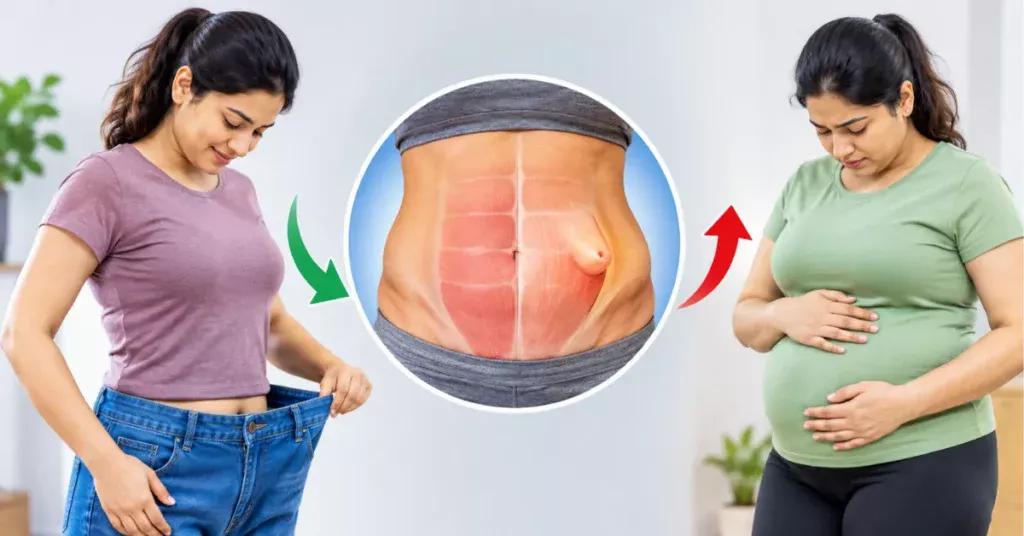
It’s common to think of weight changes as a matter of appearance or fitness, but they also change the structure of your abdominal wall. Both sudden loss and sudden gain can stress the muscles and connective tissue.
Effect of Rapid Weight Gain
When weight is gained quickly, fat is laid down in and around the abdomen. It pushes against the wall from the inside, outward. Muscles and fascia are stretched beyond their comfort zone and become thinner and less resilient. Pregnancy and sudden lifestyle changes can do the same.
The effects of rapid weight loss
Crash diets and extreme fasting often lose muscle along with fat. The abdominal wall loses its support and the skin and tissue can become lax. Repeated cycles of loss and regain, often called yo-yo dieting, put stress on the tissue each time.
Who is most at risk
- People who have undergone abdominal surgery in the past
- People with a family history of hernias
- People with fragile connective tissue
- Smokers, diabetics
- Anyone who has had a history of heavy lifting or a chronic cough
- Healthier ways to lose weight
- Aim for 0.5 – 1 kg loss per week.
- Eat enough protein to protect your muscle.
- Combine walking with light resistance training.
- Don’t skip meals, or go on extreme diets.
- If you need to gain weight, do it slowly with healthy foods.
Signs to Watch for
If you start to feel a new bulge, pulling sensation, or discomfort in your belly or groin during or after a big weight change, get it checked out. Don’t assume it’s loose skin.
When to See a Doctor
If you see a bulge or ache that comes and goes with weight changes, it is a good idea to get a proper checkup. Getting the hernia treated early can stop a small defect from becoming big.
A hernia specialist in Indore can guide you regarding the timing if you are planning for weight loss surgery or a planned repair as both can influence each other.
Your abdominal wall likes gradual change. Slow, balanced habits protect your health, muscles, and long-term comfort