
hernia is not a static condition. If untreated, it can progress through stages, and the last stage, strangulation is a real medical emergency. Knowing a simple bulge can become a life-threatening condition can help you identify warning signs before it’s too late.
From Reducible to Strangulated
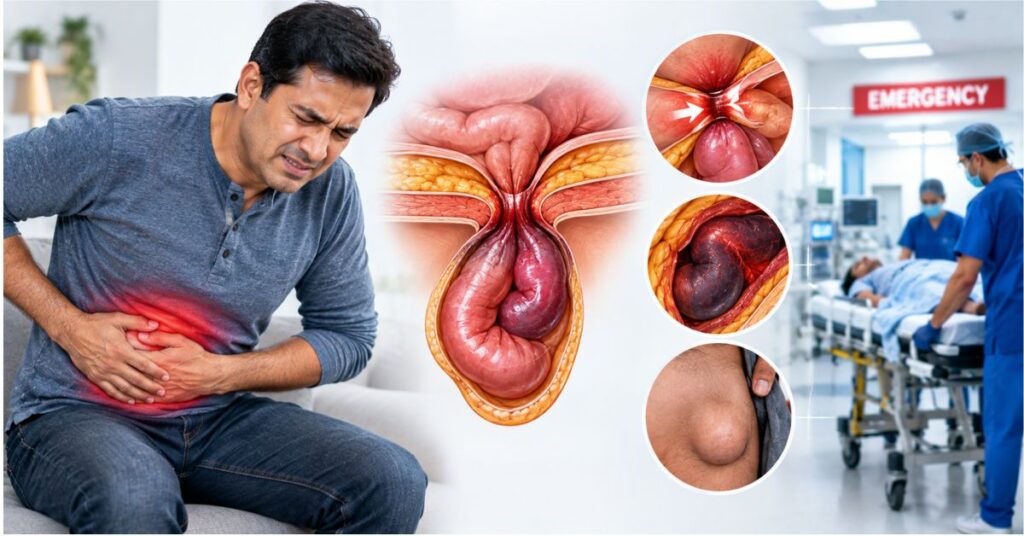
Most hernias are reducible at first, meaning the bulge of tissue will slide back in on its own. If not repaired over time, the tissue can become incarcerated or trapped in the opening. If the hernia is incarcerated, and the herniated tissue loses its blood supply, it is termed a strangulated hernia.
What Causes Strangulation?
As tissue forces itself through a tight muscle opening, swelling can constrict the blood vessels that feed that portion of bowel or fat. If the blood flow is cut off, the tissue will start to die within hours. This is not a condition that gets better with rest or home remedies – it needs emergency surgery to remove or repair the affected tissue and restore blood flow if possible.
Identifying the Symptoms
A strangulated hernia results in sudden, sharp pain in the bulge that gets worse rather than getting better. The skin overlying the area may become red, purple, or dark. Other symptoms can include fever, rapid heartbeat, nausea and vomiting, and the inability to pass gas or stool. The bulge itself becomes hard and tender in touch and does not reduce even with gentle pressure.
Why You Should Never Wait
Strangulation cuts off blood flow and the longer this is delayed, the higher the risk of tissue death, infection and life-threatening complications such as sepsis. If you or a loved one develops these symptoms, do not wait for an appointment, go to the emergency room immediately.
An ounce of prevention is worth a pound of cure
The best way to prevent ever reaching this stage is to have a hernia evaluated and treated while it is still reducible. A hernia specialist in Indore can determine if your hernia is at risk of strangulation and advises repair before it becomes an emergency, which is almost always safer and easier to recover from than a strangulation operation.
Summary
A hernia can become strangulated, which is the most dangerous stage of the hernia, and it occurs when the tissue that is trapped loses its blood supply. Recognizing the warning signs early and getting timely surgical care can mean the difference between a routine procedure and a life-threatening emergency.